


For those asking ‘what is quantity surveying,’ the term refers to the professional management of construction costs, contracts, procurement, and financial risk throughout a project’s lifecycle.
Quantity surveying is a critical part of keeping construction projects on track, within budget, and aligned with design and quality standards. Quantity surveyors work closely with architects, engineers, contractors, and clients to manage costs, monitor progress, and prevent budget overruns. Their role combines financial expertise with technical know-how to help projects run smoothly from start to finish.
Quantity surveying is a well-established profession in countries like the UK or Canada, but it is still growing in the U.S. There, many construction projects rely on cost managers or project executives to perform similar functions. This article explores the fundamentals of quantity surveying, how it applies to construction in the U.S., and why it’s increasingly important for modern projects.
The Role of a Quantity Surveyor
Why Quantity Surveying Matters in U.S. Construction
How Quantity Surveyors Keep Projects on Track
Core Responsibilities of a Quantity Surveyor
Essential Surveying Tools in Quantity Surveying
Quantity Surveying in the U.S.: Challenges and Differences
Final Thoughts
FAQs About Quantity Surveying
Quick Answer
Quantity surveying is the management of construction costs, contracts and financial risk across a project’s full lifecycle, from budgeting and tendering to final accounts. Quantity surveyors prepare cost plans, evaluate bids, monitor spending, value completed work and handle change orders. In the U.S., these tasks are often done by cost estimators, cost engineers or construction managers.
Quantity surveying is the discipline of managing costs, contracts, and financial risk across the full lifecycle of a construction project. It covers everything from early-stage budget planning and tendering through to final accounts and post-construction review.
Construction quantity surveying exists to answer one question on every project: are we getting what we’re paying for? That means translating design intent into measurable costs, tracking how those costs evolve as conditions change, and giving clients and contractors the financial clarity they need to make sound decisions.
The profession has its roots in 19th-century Britain, where surveyors were employed to measure completed work and calculate fair payment for tradespeople. Today, the scope has broadened considerably. Quantity surveyors now operate throughout the entire project cycle, advising on procurement strategy, assessing contractor bids, managing contract risk, and producing the cost reports that keep stakeholders informed at every stage.
If you’ve ever asked “quantity surveyor what is” or wondered about the quantity surveyor meaning, the simplest answer is that a quantity surveyor is responsible for managing the financial side of construction projects. Their goal is to ensure that a project is delivered within budget while maintaining quality, compliance, and contractual obligations.
A quantity surveyor, sometimes referred to as a q surveyor, becomes involved at multiple stages of a project. During pre-construction, they prepare cost plans, perform detailed takeoffs, evaluate project feasibility, and help establish realistic budgets. Once construction begins, they monitor costs, assess completed work, manage change orders, review contractor claims, and provide ongoing financial reporting.
For clients, quantity surveying provides greater visibility into where project funds are being spent. For contractors, it helps maintain profitability and reduces the risk of unexpected cost overruns. By combining technical construction knowledge with financial expertise, quantity surveyors help project teams make informed decisions throughout the project lifecycle.
A quantity surveyor is a construction cost specialist responsible for managing the financial and contractual aspects of a building project. The QS prepares cost plans, manages the tendering process, monitors expenditure during construction, values completed work, and advises on contract disputes or change orders.
The qualifications required to practice as a quantity surveyor vary by country, but professional accreditation is the recognized standard in most markets. In the U.S., quantity surveyors may hold qualifications in construction management, civil engineering, or quantity surveying from accredited universities. The American Society of Professional Estimators (ASPE) and the Association for the Advancement of Cost Engineering (AACE International) offer certifications that are widely recognized in the U.S. market. For firms working on international projects or with overseas clients, RICS accreditation is increasingly sought after.
At the start of any construction project, quantity surveyors prepare detailed cost estimates. These estimates act as a financial roadmap, helping clients and contractors plan their spending and allocate resources effectively. Every cost factor is considered to ensure a realistic budget.
Once cost estimates are prepared, quantity surveyors help manage the tendering process. They invite contractors to submit bids, evaluate proposals, and ensure that each bid meets the project’s requirements and stays within budget.
Construction rarely goes exactly according to plan, which is why quantity surveyors are actively involved during the building phase. They track expenses, review invoices, and manage budget adjustments in response to changes in the project. They monitor costs continuously and help prevent surprises that could destroy the project.
Almost every construction project experiences adjustments due to design updates, site conditions, or client requests. Quantity surveyors assess these changes, calculate additional costs, and advise the team on how to stay on budget and still accommodate necessary modifications.
Construction quantity surveying offers several benefits that are particularly important in the U.S. The peculiarity of the States is that construction projects often involve multiple stakeholders, complex regulations, and tight timelines.
Quantity surveyors help clients and contractors maintain financial control. They provide guidance on resource allocation, anticipate potential cost overruns, and suggest cost-saving strategies to keep projects within budget. This is especially useful on large-scale projects where expenses can quickly escalate.
With accurate data and specialized surveying tools, quantity surveyors identify risks early. They recommend mitigation strategies and save time and money to prevent issues that could compromise safety or quality.
Sustainable construction practices have become more important recently, so quantity surveyors help teams select materials and methods that are both cost-effective and environmentally responsible.
Quantity surveyors anticipate potential cost issues by projecting cash flow needs and reviewing contract terms. This foresight allows contractors to plan ahead, reduce financial surprises and maintain a stable project timeline.
By analyzing budgets and material usage, quantity surveyors set areas where costs can be reduced. It can be choosing alternate materials, adjusting schedules, or optimizing labor allocation.

Quantity surveyors use modern surveying equipment to collect precise data that informs budgeting and scheduling decisions. Accurate measurements reduce errors and help speed up construction.
Quantity surveyors handle a wide range of tasks to ensure projects stay financially sound and well-organized:
They prepare cost estimates covering materials, labor, and equipment.
Surveyors monitor expenses, verify costs, and adjust budgets as needed to keep spending aligned with project goals.
Before construction begins, quantity surveyors assess project feasibility, advise on procurement strategies, and ensure compliance with industry standards.
They evaluate completed work, arrange payments, and ensure contractors are compensated fairly and on time.
Surveyors create reports and dashboards to provide clients with visibility into costs, progress, and potential risks.
For people unfamiliar with quantity surveying, the role can appear similar to a cost estimator or project manager. While these positions share some responsibilities, their primary focus differs significantly.
| Role | Primary Focus | Typical Responsibilities |
| Quantity Surveyor | Cost and contract management throughout the project lifecycle | Cost planning, procurement strategy, contract administration, change management, payment valuations, risk management |
| Cost Estimator | Developing construction cost estimates before work begins | Material takeoffs, labor pricing, bid preparation, conceptual and detailed estimates |
| Project Manager | Overall project delivery | Schedule management, team coordination, communication, quality control, stakeholder management |
One way to understand the difference is that a cost estimator primarily focuses on predicting costs before construction starts, while a quantity surveyor continues managing costs and contractual matters throughout the entire project. A project manager, meanwhile, oversees the broader delivery of the project, balancing budget, schedule, quality, and stakeholder expectations.
In the United States, these responsibilities often overlap. Many organizations assign quantity surveying functions to cost estimators, construction managers, project executives, or cost managers. However, as projects become more complex, dedicated quantity surveying expertise is becoming increasingly valuable.
The right tools are essential for accuracy and efficiency in quantity surveying. Modern construction surveying relies on a combination of traditional and high-tech equipment:
Digital levels, measuring wheels, and laser distance meters allow surveyors to take quick, accurate measurements on-site.
Software like CAD and cost-estimating programs lets surveyors model projects in detail, calculate costs, and make adjustments in real time.
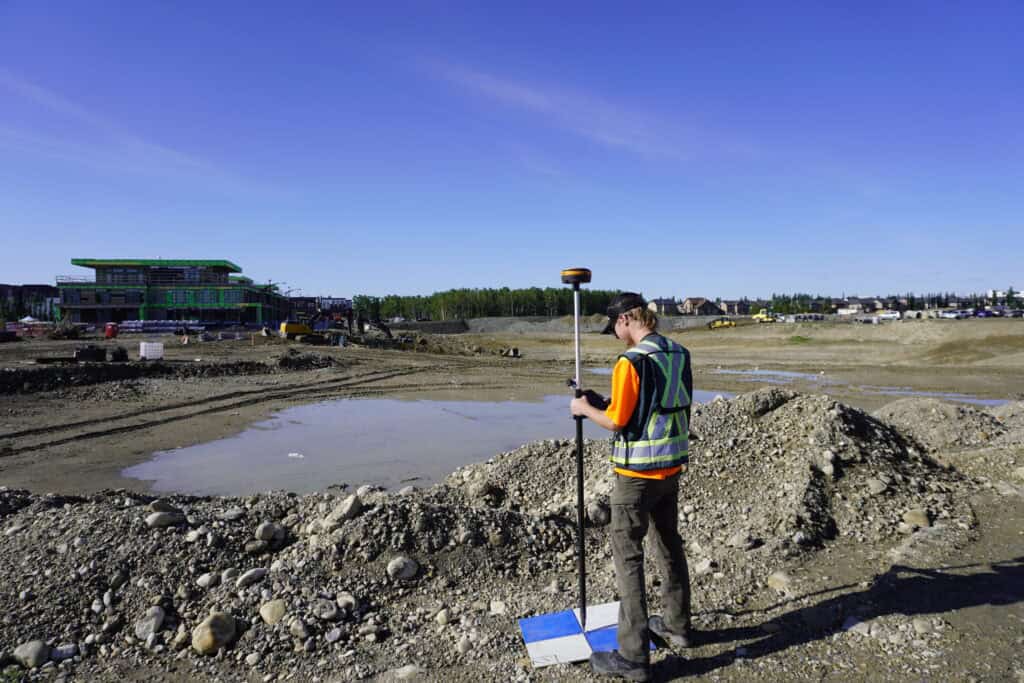
GPS systems and total stations provide precise geospatial data for land and site surveys. These tools are indispensable for accurate measurements, layout planning, and resource allocation.
Drones are increasingly popular for surveying large or complex sites. They provide aerial imagery, 3D modeling, and efficient monitoring.
One of the most common questions from American construction professionals is: what is quantitative surveying in a U.S. context? While quantity surveying is a well-established profession in countries such as the United Kingdom, Australia, New Zealand, South Africa, and Canada, the United States has traditionally approached construction cost management differently.
Rather than employing dedicated quantity surveyors, U.S. firms often distribute quantity surveying responsibilities among cost estimators, cost engineers, project controls specialists, construction managers, and project executives. These professionals perform many of the same functions, including cost forecasting, budget management, procurement support, and financial reporting.
International contractors and developers operating in the United States have played a major role in expanding awareness of quantity surveying. Global firms increasingly bring quantity surveying practices, contract management frameworks, and cost-control methodologies to large commercial, infrastructure, healthcare, and data center projects.
As a result, the profession is becoming more recognized across the U.S. construction industry. While job titles may differ, the underlying objective remains the same: controlling costs, managing financial risk, and ensuring projects achieve their commercial objectives.
The profession of quantity surveying is still gaining traction in the U.S. Many construction projects rely on project executives or cost managers to perform similar functions.
Although quantity surveying has long been a standard part of construction delivery in many international markets, adoption in the United States has historically been slower. Many owners, contractors, and developers have relied on traditional estimating, project management, or cost engineering functions rather than dedicated quantity surveyors.
This is gradually changing. As construction projects become larger, more specialized, and financially complex, owners increasingly recognize the value of continuous cost management throughout the project lifecycle rather than relying solely on initial estimates. International developers, multinational corporations, and globally active contractors have further accelerated awareness of quantity surveying practices in the U.S. market.
One of the biggest differences in the U.S. construction industry is the presence of union and non-union labor structures. Union projects often have set wage rates, benefits, and rules of employment. Non-union projects allow contractors more flexibility but may offer fewer protections.
U.S. construction projects also vary widely by region. East Coast projects may face stricter regulations and higher labor costs. West Coast projects often involve high-tech or sustainable construction practices.
Regional variations can significantly affect procurement strategies, labor costs, material availability, and project delivery methods. What works in New York may not be suitable for projects in Texas, California, or the Midwest. Quantity surveyors must understand these local market conditions to develop accurate forecasts and effective cost-control strategies.
The growing presence of international construction firms has helped introduce more formal quantity surveying methodologies into the U.S. market. Organizations with experience in Europe, Canada, Australia, and the Middle East frequently incorporate quantity surveying principles such as detailed cost planning, structured procurement strategies, lifecycle cost analysis, and rigorous contract administration.
Although the U.S. is increasingly recognizing the value of quantity surveyors, many clients are still unfamiliar with the role. Stakeholders need to be educated about the importance of cost management, risk mitigation, and accurate project measurement.
The career outlook for quantity surveyors is increasingly positive as owners, developers, and contractors place greater emphasis on cost certainty and financial risk management. While compensation varies based on location, industry sector, experience level, and professional credentials, quantity surveyors often earn competitive salaries comparable to those of senior estimators, cost engineers, and construction managers.
Several factors can influence earning potential, including:
Demand is particularly strong on large-scale projects where cost control, contract administration, and financial forecasting play a critical role. As construction spending grows and projects become more sophisticated, professionals with quantity surveying expertise are expected to remain highly sought after.
For individuals considering a career in quantity surveying, the profession offers a blend of technical construction knowledge, financial analysis, contract management, and strategic decision-making. This combination makes it an attractive path for those interested in both the business and operational sides of construction.
Quantity surveying in construction is all about keeping a project’s costs under control from start to finish. In the U.S., quantity surveyors track budgets, monitor spending, and figure out how design changes might affect costs. They also have to navigate local labor rules and regulations. They rely on surveying tools, software, and careful data analysis to get accurate estimates and reliable reports.
Throughout a project, quantity surveyors help make sure invoices match the work completed, procurement stays on track, and any changes are properly accounted for. Having a quantity surveyor on the team means spotting potential budget issues early. Essentially, they’re the ones helping projects stay on budget, on schedule, and running smoothly from start to finish.
A quantity surveyor manages costs and budgets for construction projects, ensuring they stay on track and meet financial goals.
It helps control costs, minimize risks, and maintain project efficiency while preventing budget overruns.
Surveyors rely on digital levels, laser distance meters, GPS, total stations, CAD software, and drones for accurate measurements and cost tracking.
The role is less established, often overlaps with cost managers or project executives, and must adapt to regional labor structures and market differences.
By providing accurate measurements, cost estimates, and proactive planning, quantity surveyors help projects stay on schedule and make efficient use of resources.
In the United States, quantity surveying responsibilities are often performed by cost estimators, cost engineers, project controls specialists, construction managers, or cost managers. While the job title may differ, these professionals perform many of the same cost-planning, budgeting, procurement, and financial management functions associated with quantity surveying.
