

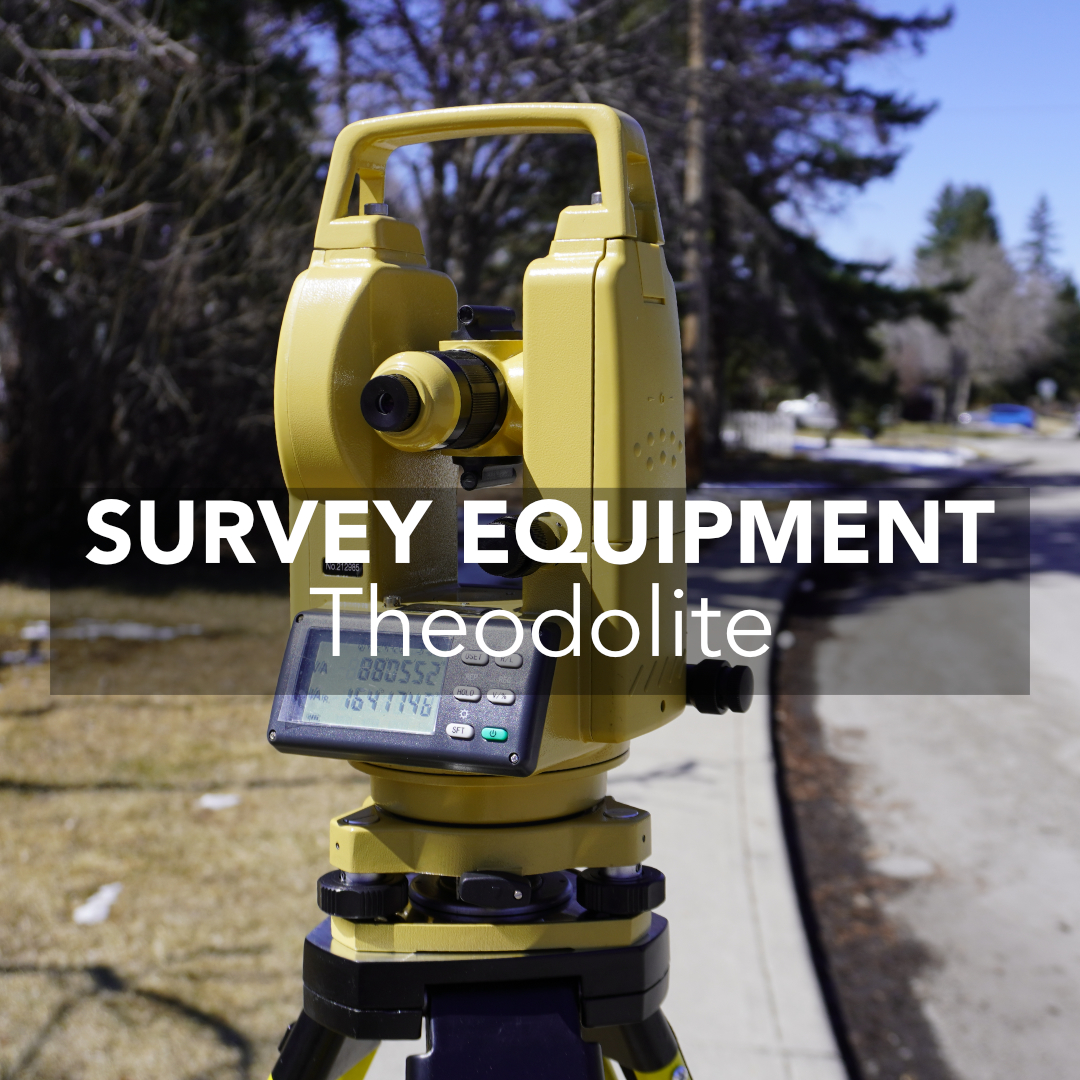
In the field, every measurement tool shapes how a project unfolds. Some jobs only need clean, reliable angles. Others demand full coordinate data, quick layout, and tight integration with design files. That’s where the long-standing comparison between the theodolite and the total station becomes more than a technical distinction; it becomes a strategic choice that affects productivity, labor, and the accuracy of your deliverables depend on.
Across U.S. surveying, construction, and engineering sites, crews work in wildly different environments: open subdivisions, tight urban corridors, wooded parcels, and complex commercial builds. The instrument you bring to that environment determines how fast you can work, how much data you can trust, and whether the workflow keeps up with modern project requirements.
This article breaks down the differences in a clear, practical way, how each tool works, where each excels, and how to choose the right instrument for your specific task, budget, and accuracy needs.
What Is a Theodolite?
What Is a Total Station?
Theodolite vs Total Station: Core Differences
When a Theodolite Still Makes Sense
When a Total Station Is the Better Option
Accuracy Considerations
Workflow Efficiency on U.S. Job Sites
Data Handling and Digital Integration
Real-World Use Cases Across Surveying, Construction, and Engineering
Cost and Value Comparison
Theodolite vs Total Station: How to Choose
Final Thoughts
A theodolite is an angle-measuring instrument built around a telescope mounted on horizontal and vertical axes. It allows surveyors to sight a point and record angular changes, providing precise readings for layout, control, and simple surveying tasks. Because theodolites measure angles only, distance must be obtained manually or via trigonometric calculations.
Theodolites remain reliable, inexpensive, and durable. Many small U.S. survey firms, environmental crews, and contractors keep one for angle-only work or as a backup when electronics fail or when working in environments where powered devices are not suitable.
Modern crews typically choose between a mechanical model and an electronic theodolite, the latter offering a digital angle readout that reduces reading errors during theodolite surveying without adding the full cost of a total station.
A total station builds on theodolite design by adding an Electronic Distance Measurement (EDM) system and a built-in processor. Rather than measuring just angles, a total station can calculate complete 3D coordinates by combining angle and distance readings instantly. This allows surveyors and construction crews to map or lay out points faster, with fewer manual steps and far fewer chances for error.
Modern U.S. workflows, commercial layout, subdivision design, road alignments, utility corridors, structural monitoring, depend heavily on total stations because they deliver both speed and precision while integrating directly with CAD, GIS, and engineering software.
An electronic total station handles both distance and angle measurement in one instrument, which is the core reason it has replaced the theodolite on most active job sites.
Although the instruments look similar on a tripod, their field performance differs sharply.
The table below breaks down how a theodolite and a total station compare across the factors that matter most in the field:
| Factor | Theodolite | Total Station |
| Measuring capabilities | Angles only (horizontal and vertical) | Angles, distance, and full 3D coordinates |
| Distance measurement | Manual, via tape or trigonometric calculation | Electronic, via built-in EDM |
| Coordinate calculation | Manual, calculated after fieldwork | Automatic and instant, in real time |
| Data storage | Paper field notes or a separate data collector | Internal memory or SD card, with direct export |
| One-person operation | No, typically requires a two-person crew | Yes, especially with robotic models |
| Digital integration | Limited, requires manual data entry | Direct integration with CAD, GIS, and design files |
| Ideal applications | Angle-only control, training, hazardous zones | Layout, topography, as-builts, structural monitoring |
| Learning curve | Lower, simpler to learn and operate | Steeper, requires more technical training |
| Cost | Lower upfront investment | Higher upfront investment |
| Workflow efficiency | Slower, more manual steps per point | Faster, fewer steps, higher point-collection throughput |
These differences explain why theodolites remain niche tools while total stations have become standard on most U.S. job sites.

Even with modern equipment widely available, theodolites continue to hold value in certain situations. Their simplicity, ruggedness, and low cost make them the right choice for particular environments and budgets.
A theodolite is a strong fit when a project requires only angular measurements, when work is performed in hazardous zones where battery-powered devices are restricted, or when teams are training new personnel in the fundamentals of field measurement. Some firms also use them as backup instruments in case an EDM system fails in the field.
Total stations dominate U.S. surveying and construction work because they solve more tasks with fewer steps. They eliminate the manual trigonometry and physical distance measurement required with theodolites, enabling fast stakeout, accurate topography, and efficient as-builts.
Most construction crews now use total stations for building corners, slabs, utilities, foundations, gridlines, and large-scale layout. Surveyors rely on them for subdivision mapping, ALTA/NSPS surveys, engineering control, deformation monitoring, and any work where coordinate accuracy matters.
The widespread shift toward single-operator robotic total stations reflects the industry’s emphasis on speed, consistent layout, and lower labor requirements.
Theodolites can achieve excellent angular precision, but they lack the tightly integrated workflows that total stations provide. When distance must be physically measured and angles must be recorded manually, overall accuracy depends heavily on operator skill, environmental conditions, and calculation consistency.
Total stations reduce these risks by capturing angles and distances electronically and computing coordinates automatically. EDM systems deliver sub-centimeter distance accuracy, and the onboard compensator minimizes leveling errors. For boundary surveys, structural layout, or deformation studies, where accuracy must be repeatable and defensible, total stations offer a more reliable solution.
Several field-level factors influence how close either instrument gets to its stated specifications:
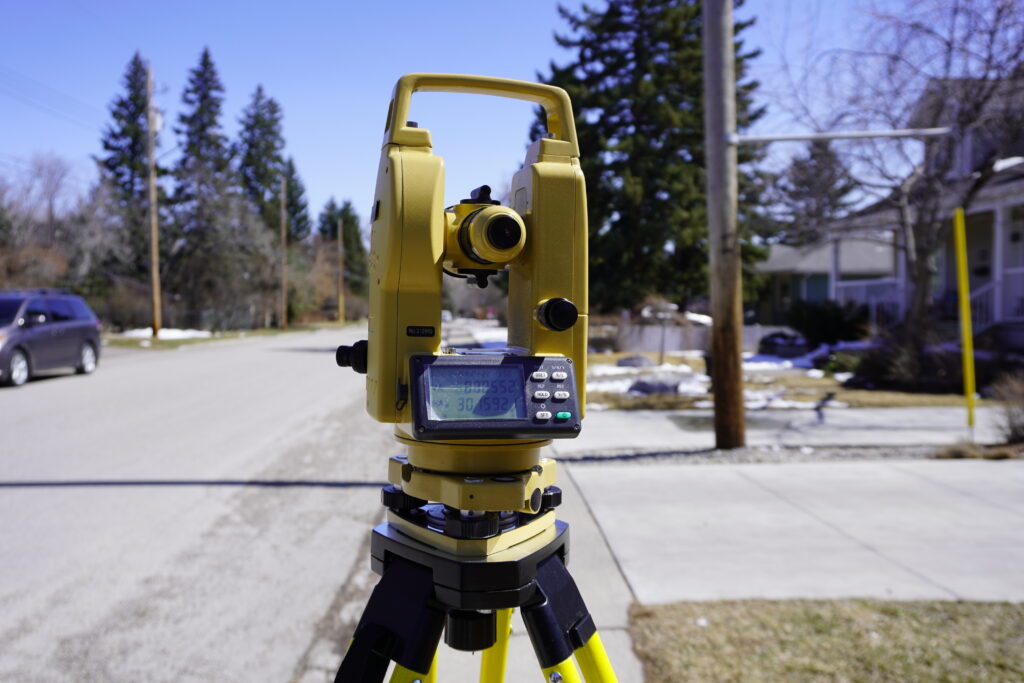
The difference in workflow between a theodolite and a total station becomes especially clear during construction layout or high-volume surveying.
Workflow advantages of a total station:
Theodolite workflows require two people: one to sight and record angles and one to hold the measuring tape or prism. Total stations shrink the process into a single operator’s task list, drastically reducing both time and labor.
Modern U.S. surveying and construction rely heavily on digital plans, CAD models, GIS layers, machine control workflows, and electronic as-builts. Total stations integrate naturally with this ecosystem: users can upload design files, collect measurements directly against those designs, and export data for immediate use in office tools.
Theodolites, by contrast, require manual note-taking or a separate data collector, increasing the risk of mis-entered values and slowing down the entire process. In an industry where timeline pressure is constant, digital compatibility is often the deciding factor between the two instruments.
In everyday practice, theodolites and total stations serve different purposes across the U.S.
Surveyors use theodolites for basic control, training, or angle-only work in remote areas. Construction firms use them sparingly during simple setups where distances aren’t required. Engineering teams may deploy them in hazardous industrial zones for safety reasons.
Total stations, on the other hand, appear in almost every major professional workflow: subdivision layout, roadway alignment, utility staking, commercial construction grids, topography under canopy, and structural monitoring. Their reflectorless capabilities also allow safe measurement of inaccessible features such as retaining walls, steep slopes, or bridge structures.
Theodolites cost far less than total stations, which makes them attractive for firms with minimal measurement needs or with small budgets. However, the long-term value of a total station is significantly higher for most crews.
A single robotic total station can replace an entire two-person layout crew. The savings from reduced labor, combined with faster point collection and fewer measurement errors, quickly outweigh the higher initial investment. For most U.S. contractors and surveyors, the total station becomes the more cost-effective tool within the first months of steady use.
Purchase price is only one part of the equation. Total cost of ownership includes several factors that play out over the life of the instrument:
When deciding between the two instruments, the project’s scope, accuracy requirements, environment, and budget should guide the choice. Choose a theodolite when:
Choose a total station when:
Because U.S. surveying and construction projects increasingly rely on digital workflows and precise coordinate data, total stations have become the preferred tool for most professional applications.
A theodolite measures angles only, while a total station combines angle measurement with electronic distance measurement (EDM) to calculate full 3D coordinates automatically.
A total station is generally more accurate overall because it removes the manual distance measurement and calculation steps that introduce error in a theodolite workflow, though a well-calibrated theodolite can still achieve excellent angular precision on its own.
Yes, in most cases. A total station performs every function a theodolite does, plus distance and coordinate measurement, which is why it has become the standard instrument on most U.S. job sites.
A theodolite makes sense for angle-only work, tight budgets, hazardous zones where powered instruments aren’t practical, or training new surveyors on measurement fundamentals.
For most crews, yes. A total station’s labor savings, faster point collection, and reduced error rate typically offset its higher purchase price within the first months of regular use.
Theodolites and total stations each serve important roles, but they belong in different parts of a professional workflow. A theodolite offers simple, reliable angular measurement at low cost, while a total station delivers complete coordinate data, fast layout, and seamless digital integration. For U.S. surveyors, contractors, and engineers who rely on efficiency and accuracy, the total station is now the standard instrument.Bench-Mark supports crews across the United States with total stations, theodolites, and expert guidance from a team that serves customers nationwide, not just within local dealership territories. Whether you’re upgrading your workflow or selecting your first precision instrument, we can help you choose the equipment that fits your project needs.
