

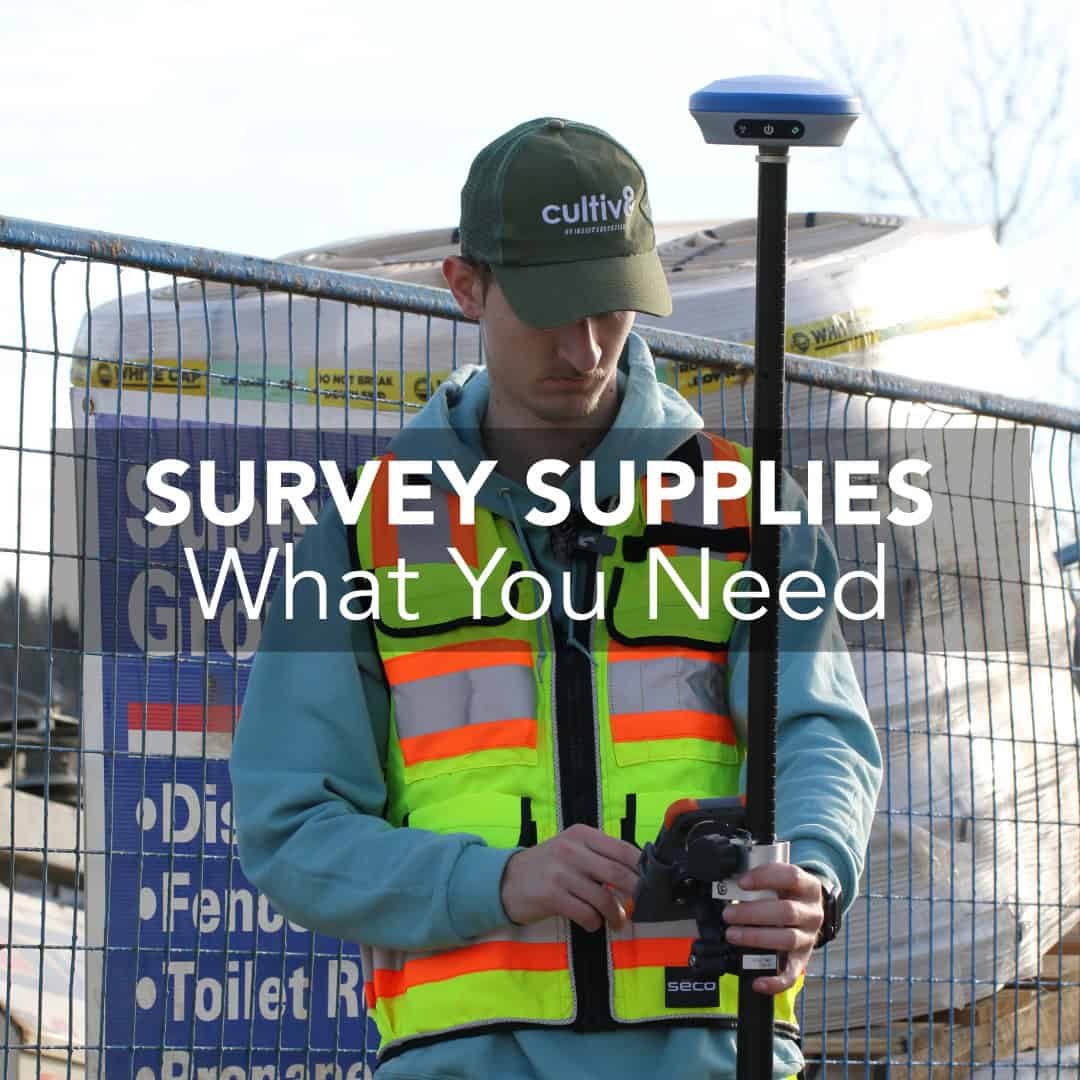
Behind every accurate survey is a complete kit of supplies and accessories that keep crews productive, protect expensive equipment, and ensure measurements hold up in the field. The right land surveying supplies on hand separates efficient fieldwork from constant delays and frustration.
What You Can’t Survey Without
Support Equipment: Tripods, Poles, and Mounting Hardware
Prisms and Targets: Making Total Stations Work
Field Supplies That Keep Work Moving
Protection and Maintenance Supplies
Building Your Supply Kit
The Right Supplies Make the Difference
Before we get into survey accessories and supplies, let’s establish the foundation. Your core surveying equipment includes the instruments that actually capture measurements and data. Total stations, GNSS RTK receivers like the Hemisphere S631, levels, and data collectors form the backbone of any survey operation. These aren’t supplies in the traditional sense, but they’re the tools everything else supports.
Total stations measure angles and distances to establish precise three-dimensional positions. They’re essential for boundary work, topographic surveys, and construction layout where line-of-sight measurements deliver the accuracy you need. GNSS RTK systems provide centimeter-level positioning using satellite signals, making them ideal for large sites, subdivision layout, and projects where moving between points quickly matters more than having clear sight lines.
Levels ensure proper elevation control across construction sites and establish benchmarks for vertical reference. Modern automatic levels and laser levels speed up the process while maintaining accuracy.
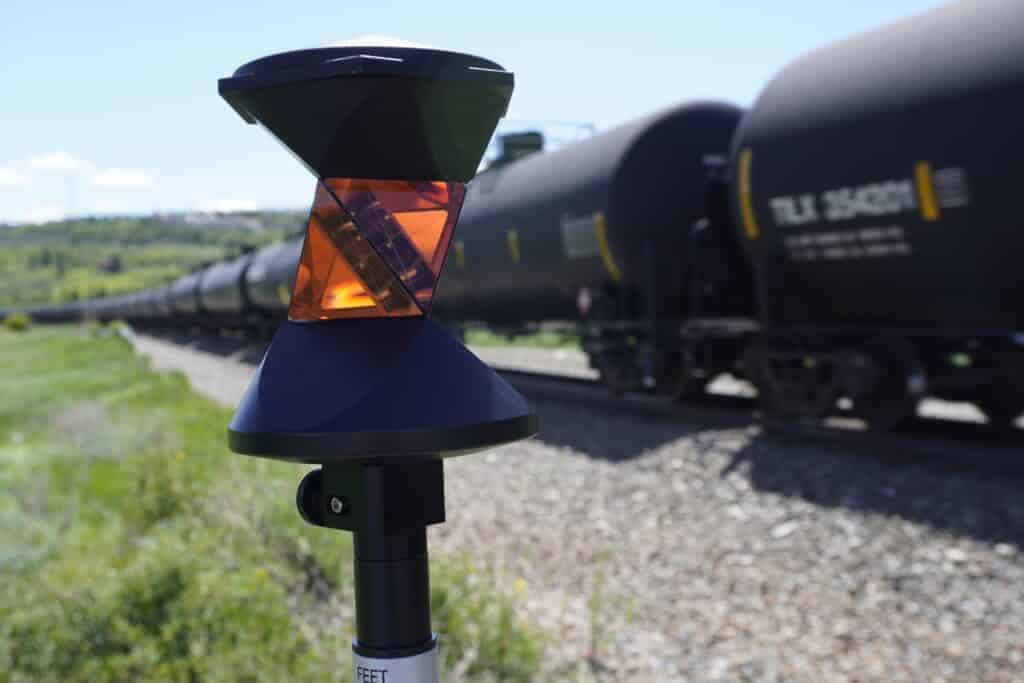
Your instruments need stable platforms to deliver accurate results. Tripods and survey poles are fundamental land surveying supplies that directly impact measurement quality.
A sturdy tripod keeps your total station or level rock-solid during measurements. Aluminum tripods offer a good balance of weight and durability for most fieldwork, while wooden tripods provide better vibration damping when you’re working near traffic or heavy equipment. For rough terrain, choose tripods with adjustable legs and pointed metal shoes that dig into soft ground without slipping.
Survey poles and range poles support prisms for total station work and provide portable mounting for GNSS receivers. Fixed-height poles work fine when you’re always measuring from the same height, but telescoping poles give you flexibility to work at different elevations or reach over obstacles. Look for poles with dual-grad markings and built-in bubbles for quick leveling in the field.
Tribrachs connect your instruments to tripods and provide precise leveling and centering over survey points. A quality tribrach with smooth leveling screws and a reliable optical plummet makes setup faster and more accurate. Many surveyors keep multiple tribrachs so they can swap instruments quickly without releveling each time.
Total stations need something to measure to. Prisms reflect the EDM signal back to the total station, allowing it to calculate distance accurately. Single prisms work for most applications, but prism poles with triple prisms give you better range and stronger signal return when you’re working at longer distances.
Prism constants matter. Every prism has a specific constant that must match the setting in your total station for accurate distance measurements. Most modern prisms use a -30mm constant, but always verify before starting work.
Targets help you sight in on specific points when doing layout work or setting control. Reflective targets work well for short distances, while larger range poles help you spot your rod person at longer ranges. For machine control and construction staking, magnetic targets that attach directly to rebar or steel save time over traditional staking methods.
Beyond instruments and support equipment, everyday surveying supplies keep your crew productive in the field. These are the items you don’t think about until you need them and don’t have them.
Marking and flagging supplies let you physically mark points so construction crews can follow your layout:
Measuring tools provide backup measurements and quick checks without setting up instruments. Fiberglass measuring tapes resist stretching better than cloth tapes and work in wet conditions without corroding like steel tapes. A 100-foot tape handles most property line checks and offset measurements, while a 300-foot tape covers longer distances for preliminary layout work.
Field books and data storage preserve your work even when technology fails. Water-resistant field books with grid paper let you sketch site conditions, record manual measurements, and keep notes that don’t depend on battery life. Even in an era of digital data collectors, having a written backup of critical measurements and station setups can save a project when equipment fails.
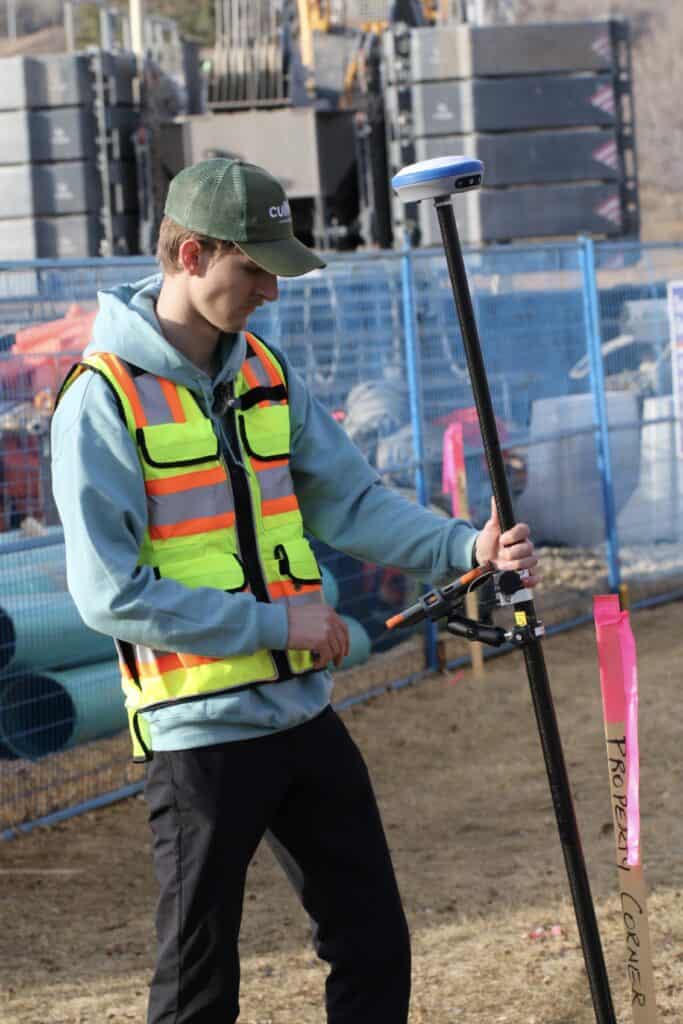
Surveying equipment represents a significant investment that needs protection from weather, impacts, and the general abuse of fieldwork. The right protective supplies extend equipment life and prevent expensive repairs.
These protect instruments during transport and storage. Your total station and GNSS receivers should always travel in their original hard cases with foam inserts that secure them against shock. For data collectors and controllers, consider ruggedized cases that seal out dust and moisture while still allowing screen access.
Keeps you working in conditions that would otherwise shut down operations. Instrument umbrellas shield total stations and data collectors from rain and direct sun that can overheat electronics or make screens impossible to read. For extended work in wet conditions, waterproof covers for data collectors let you keep recording data without exposing sensitive electronics to moisture.
Lens cleaning solution and microfiber cloths keep optics clear without scratching delicate coatings. Canned air removes dust from instrument vents and connectors. A small brush cleans dirt from threads and leveling screws before it causes wear or binding.
This basically determines whether you finish the day’s work or head back early because equipment died. Spare batteries for every instrument should be standard kit, along with a vehicle charger so you can top off batteries during lunch or between sites. For extended projects, a portable power station can charge multiple batteries simultaneously without needing access to grid power.
Not every crew needs every item on this list, but every crew needs a well-thought-out kit that matches their typical projects.
A systematic approach to restocking after each project ensures you’re always ready for the next job.
Professional surveying depends on having the right land surveying supplies when you need them. Quality equipment matters, but so do the accessories, consumables, and support items that keep that equipment working effectively in real-world conditions. When your crew has everything they need to set up quickly, mark accurately, and protect their instruments, projects run smoother and measurements stay reliable.At Bench-Mark, we understand that surveying supplies go beyond the main instruments. Our team works with survey crews across the U.S. to ensure they have not just the GNSS receivers and total stations, but also the complete kit of supplies and accessories that make fieldwork efficient. Because the best GPS survey equipment only delivers results when you have everything else you need to use it properly.
