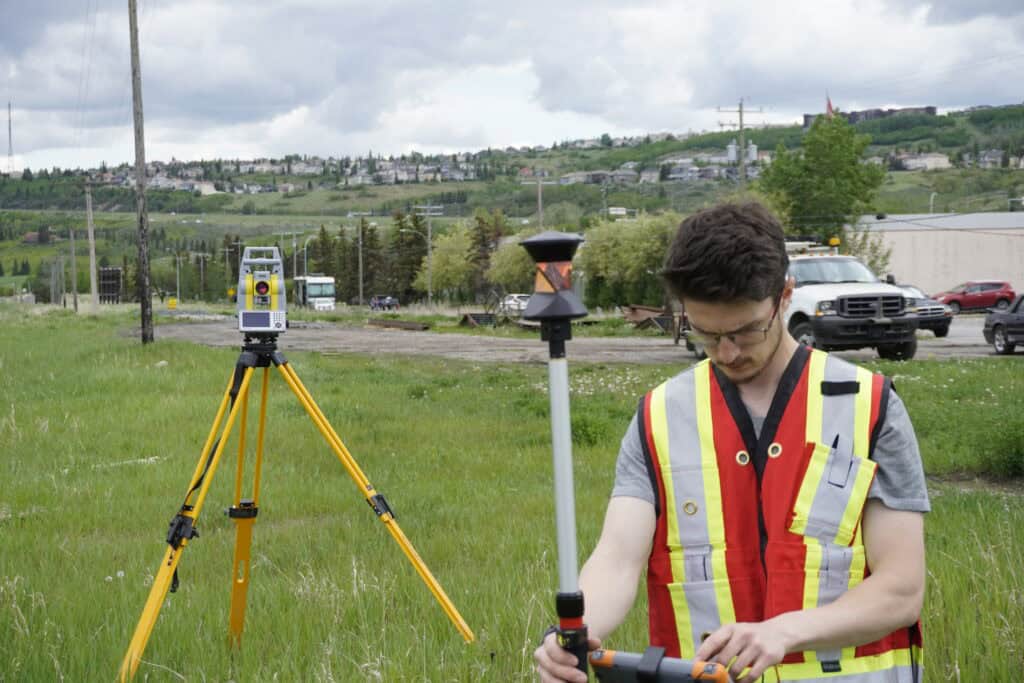
If you’re a land surveyor or construction professional eyeing a new RTK system or total station, you’re probably weighing the classic question: should you buy your equipment outright or lease it? For many, especially small to mid-size firms, leasing equipment can offer major cash flow advantages without compromising on access to top-tier tech.
Here’s what you need to know about leasing, using a real-world case study from one of our clients working with a GeoMax Zoom95 Robotic Total Station.
Real Numbers: A Leasing Example
Tax Benefits That Can Lower Your True Costs
Lease Advantages You Won’t Get From a Bank
Hidden Costs of Buying Surveying Equipment: Depreciation, Calibration, and Downtime
Who Leasing Surveying Equipment Works Best For
Pros & Cons of Leasing
Buying vs. Leasing Surveying Equipment: What’s Best for Your Business Size
Leasing vs. Buying at a Glance
Bottom Line: Lease for Flexibility, Buy for Long-Term Use
FAQs
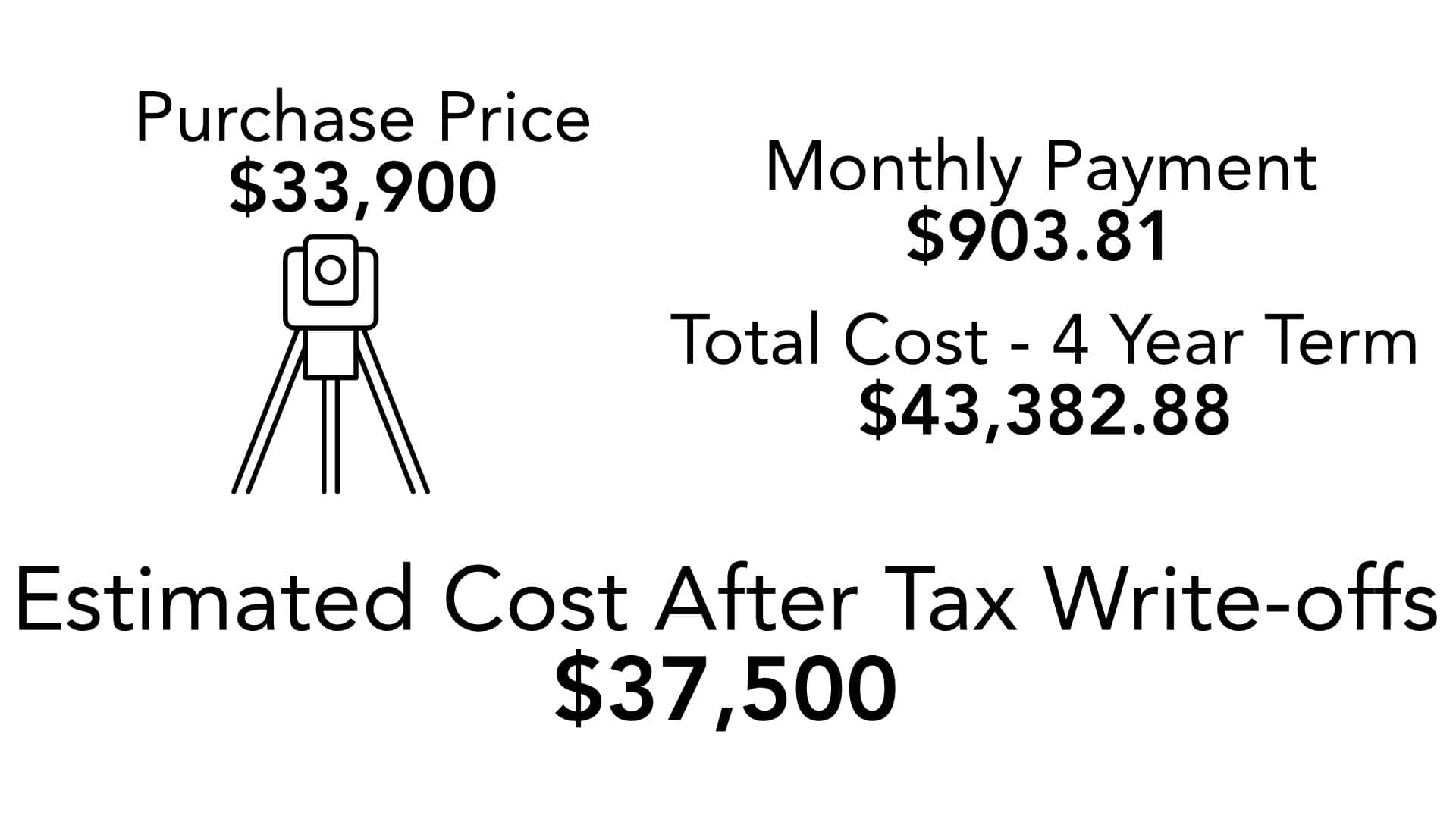
Let’s start with some actual numbers from a 48-month lease:
That last line’s important: unlike bank financing, commercial leases typically require a small upfront commitment, but not a massive down payment.
One of the biggest reasons to take a serious look at leasing is tax efficiency. Let’s break it down.
Say you’re paying $903.81/month. Over a year, that’s $10,845.72. How much of that you can deduct depends on how your lease is structured and how your accountant treats it.
To keep the estimate conservative, assume a 50/50 split between interest and principal, so about half of each payment is treated as deductible. If your business is in a 27% tax bracket (as a rough average), that’s roughly $1,464 a year, or about $122 a month, in tax savings.
Over the 48-month term, that adds up to about $5,860, bringing your real cost down from $43,382.88 to roughly $37,500. That’s only about $3,600 more than the $33,900 purchase price, spread over four years, while your cash stays in the business.
If the full payment qualifies as a deductible business expense, the savings are larger: about $2,928 a year at the same 27% rate. Confirm the treatment for your business with your accountant.
There’s more to leasing than just the rate.
Commercial leases don’t show up on your personal credit report. That means your borrowing capacity elsewhere remains untouched, giving you more flexibility when you need financing for other areas of your business.
With banks, loans are often secured against all your business assets: past, present, and future. Not ideal if you want to keep your equipment or capital unencumbered.
Leases usually don’t require a GSA, so you keep full control over your company’s other assets without needing to worry about something going wrong.
Make 12 months of on-time payments? Many leases allow you the option to buy out your lease early, with interest discounts. You’re not locked in. That means if your cash situation improves, you can pay off the equipment and save even more.
Let’s face it: writing a $30K+ check for gear up front can be a stretch, even for growing firms. With leasing, you can get the tools you need now, while keeping your monthly overhead predictable.
The sticker price is only part of what ownership costs. Three expenses tend to get left out of a buy-versus-lease comparison, and they add up over the years you hold the gear.
Survey technology moves quickly, and once you own an instrument, its resale value is your problem. A receiver or total station that was top of the line when you bought it will be worth noticeably less once newer generations arrive, and you carry that loss whether or not you ever sell.
Total stations, robotic units, and GNSS receivers need regular calibration and servicing to keep measurements within tolerance. Those checks cost money, and they’re yours to budget for as the owner. Skipping them risks inaccurate data, which can cost far more than the service itself.
If your only instrument is at the service center, your crew isn’t producing billable work. For a small firm with one or two units, even a short repair can stall a project and push back deadlines.
Keep these three in mind when you compare the purchase price with a lease payment, because they’re part of the true cost of buying.
Leasing makes the most sense if:
| Pros | Cons |
|---|---|
| Lower upfront cost | Higher total cost than cash purchase (before tax savings) |
| Tax write-offs help lower real cost | Must verify exact savings with your accountant |
| Doesn’t hit your credit report | Commitment for lease term unless buying out early |
| Usually no GSA on your other assets | Requires timely monthly payments |
| Early buyout options available | Not ownership until lease ends or buyout is exercised |
Your decision to lease or buy often comes down to the size and structure of your business, and how you manage capital.
Leasing usually makes more sense here. It minimizes upfront costs, keeps cash flow steady, and avoids large capital outlays. For many small operators, preserving liquidity is more valuable than owning equipment outright, especially if projects are variable or seasonal.
Leasing gives you room to grow. You can scale your gear with new contracts, keep tech fresh, and avoid tying up credit lines. Plus, tax efficiency becomes more meaningful at this level, and predictable payments simplify planning across departments or crews.
Bigger firms with stronger balance sheets may prefer to buy, especially for equipment they use daily over many years. Ownership can provide long-term cost savings and balance sheet advantages. That said, even large companies lease when they want to keep tech current or offload asset depreciation.
If your business needs flexibility and cash preservation, leasing is likely the better fit. If long-term use and asset ownership are your top priorities, buying might make more sense.
Here’s how the two options compare side by side.
| Option | Commitment | Ownership | Upfront Cost | Best-Fit Use Case |
|---|---|---|---|---|
| Equipment lease | Typically 2–5 years | Option to purchase at the end of the term | Moderate; first payment, security deposit, and admin fee | Ongoing fieldwork, firms that want current tech and steady cash flow |
| Outright purchase | None after purchase | Yes, from day one | High; full price, such as $33,900 for the Zoom95 | Daily use over many years, firms with strong balance sheets |
A lease is a structured financing agreement, usually over 2–5 years, with the option to purchase at the end. It also makes it easier to work with current-generation technology, like a 7th generation RTK receiver with IMU tilt or a high-spec robotic total station, without paying the full price up front. When it’s time to upgrade, you’re not stuck holding aging gear.
For most surveying businesses doing consistent fieldwork, leasing offers predictable costs, current equipment, and a clear path to ownership. Buying remains a solid choice when you’ll use the same instrument daily for many years and have the capital to spare.
Leasing is more than just an alternative to buying. It’s a strategic financing tool. It helps you stretch your budget, maximize tax deductions, and access the latest surveying equipment without tying up your cash or collateral.
If you’re eyeing a GeoMax Zoom95, Hemisphere S631, or any other premium GPS survey equipment, leasing could be the smartest way to get it working for your business today, not six months from now.
Need help running the numbers?
We’ll walk you through real examples based on your budget, term preferences, and tax bracket. As always, consult your accountant to verify how leasing fits into your tax strategy.
Get in touch to learn more or request a personalized lease quote.
Leasing gives you access to top-tier equipment without a massive upfront cost. It helps conserve cash flow, offers tax benefits, and gives you the flexibility to upgrade sooner, making it ideal for growing or budget-conscious firms.
The total paid over time is usually higher, but tax savings can significantly reduce the true cost. In the example above, the real cost after tax savings is about $37,500 against a $33,900 purchase price, and your cash stays free in the meantime. Always check with your accountant to run the numbers for your situation.
Commercial leases don’t show up on your personal credit report, so your borrowing capacity elsewhere stays intact. Leases also don’t usually require a General Security Agreement, which means your company’s other assets stay unencumbered.
Yes. Many leasing plans offer early buyout options, often with interest discounts if you’ve made consistent payments for 12 months or more. You’re not locked in if your cash situation improves.
Leasing works best for firms that want flexibility, need equipment fast, plan to upgrade often, or want to optimize cash flow and tax treatment without tying up lines of credit.
It comes down to how you use your gear and how you manage capital. Buying works well if you’ll use the same instrument daily for many years and have the cash to spare. Leasing is the better fit if you want to keep cash free, optimize tax treatment, and upgrade to current tech along the way.
Typically just your first monthly payment, a security deposit, and an admin fee. Unlike bank financing, there’s no large down payment, so you can get the equipment working for you without a major capital outlay.
Bench Mark Equipment & Supplies is your team to trust with all your surveying equipment. We have been providing high-quality surveying equipment to land surveyors, engineers, construction, airborne and resource professionals since 2002. This helps establish ourselves as the go-to team in Calgary, Canada, and the USA. Plus, we provide a wide selection of equipment, including global navigation satellite systems, RTK GPS equipment, GNSS receivers, and more. We strive to provide the highest level of customer care and service for everyone. To speak to one of our team today, call us at +1 (888) 286-3204 or email us at [email protected]