

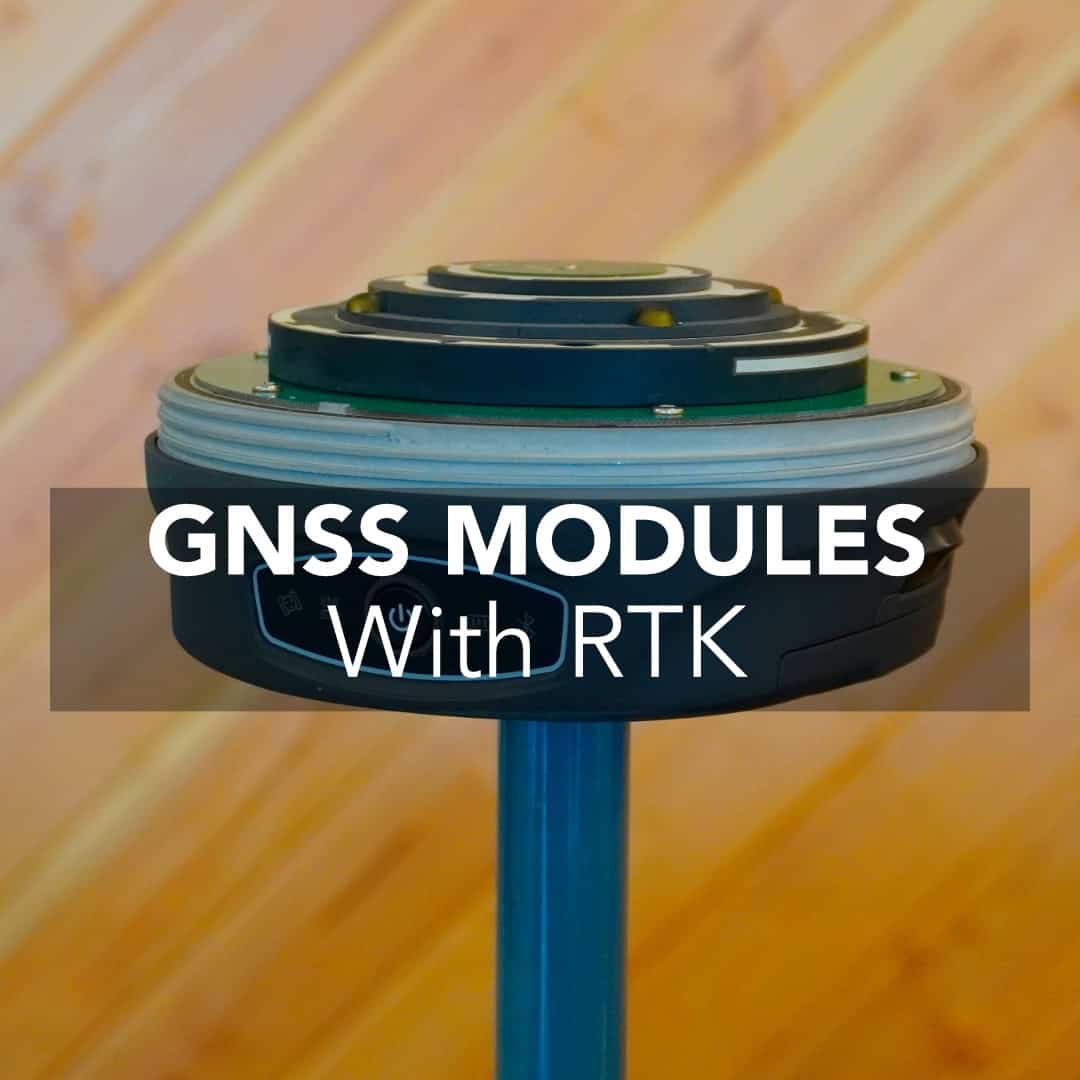
The GNSS module is the center of modern surveying transformation. The GNSS receiver module in your gear determines how fast and how accurately you get the job done. There is something specific that makes GNSS modules different from traditional systems. Let’s go through how GNSS modules are shaping today’s tools and what to look for when choosing your next receiver.
What Is a GNSS Module
How GNSS Modules Directly Impact Your Field Accuracy
The Rise of Modular GNSS Receiver Systems
Why This Matters to the U.S. Market
What to Look For in a GNSS Receiver Module
The Role of GNSS Modules in Modern Surveying
Frequently Asked Questions
A GNSS module is the component in your receiver that tracks satellites and calculates position. It is the main thing of the GPs gear, because it pulls signals from constellations like GPS, GLONASS, Galileo, and BeiDou. If you pair it with RTK, it will also deliver real-time corrections. GNSS receiver module is what powers every centimeter-accurate shot your rover takes.
Over the past years, GNSS modules have become smaller, faster, and far more reliable. That’s why modern systems like the Hemisphere S631 or the GeoMeasure Nano 7 can deliver 8mm accuracy. They work even in rough terrains and can run on internal batteries for a full day.
A GNSS module is responsible for receiving satellite signals, processing positioning data, and calculating coordinates. While the module itself is only one part of a complete positioning system, it performs the core navigation functions that make modern surveying possible.
GNSS modules receive signals from satellite constellations including GPS, GLONASS, Galileo, and BeiDou. The module measures the travel time of signals transmitted from multiple satellites and uses trilateration to calculate position. Modern GNSS hardware can simultaneously track dozens of satellites, improving accuracy, reliability, and time-to-first-fix.
Many modern GNSS modules also support carrier-phase measurements, allowing them to work with RTK correction services for centimeter-level positioning. Combined with multi-frequency tracking and advanced processing algorithms, today’s survey-grade modules deliver significantly better performance than earlier single-frequency designs.
The terms GNSS module and GNSS receiver are often used interchangeably, but they are not the same thing.
A GNSS module is the positioning engine embedded inside a device. It processes satellite signals and generates location data.
A GNSS receiver is the complete system built around that module. In addition to the GNSS module, a receiver typically includes:
For example, the Hemisphere Lyra engine functions as the GNSS module, while a complete survey receiver such as the Hemisphere S631 incorporates that module alongside all supporting hardware required for field operation.
Understanding this distinction helps surveyors evaluate both the internal positioning technology and the overall system design when comparing equipment.
The quality of the GNSS module inside your receiver directly affects:
Older systems often came with GNSS modules that were proprietary or built for single-frequency use. In contrast, today you can take advantage of multi-frequency, multi-constellation support in a compact, durable package. These capabilities are possessed by high-performing models like Hemisphere’s Lyra chipset.

The move to standalone GNSS modules has shown companies to expand the expectations about survey system design. Today, manufacturers focus on modularity and open integrations instead of creating a closed box. They are moving in line with the surveyor’s needs.
Now you can pair a compact GNSS module with:
You are now much more flexible in how to build your kit and not locked into one ecosystem.
Modern GNSS performance is no longer determined by satellite tracking alone. Today’s advanced GNSS hardware combines multiple technologies to improve positioning reliability, accuracy, and availability in challenging environments.
Modern modules simultaneously track GPS, GLONASS, Galileo, and BeiDou satellites. More satellites improve positioning geometry, increase signal availability, and reduce the impact of obstructions.
Many professional GNSS modules support multiple frequency bands such as L1, L2, and L5. Multi-frequency tracking helps reduce atmospheric errors, improves RTK initialization times, and enhances performance under canopy and near structures.
RTK-enabled modules use correction data from base stations or NTRIP networks to achieve centimeter-level accuracy. This remains the standard for professional surveying, machine control, and construction layout applications.
GNSS alone can struggle when satellite visibility is temporarily lost. GNSS/INS systems combine satellite positioning with inertial sensors to maintain reliable positioning through interruptions.
Modern systems increasingly integrate Inertial Measurement Units (IMUs) containing accelerometers and gyroscopes. Sensor fusion algorithms combine GNSS and IMU data to improve positioning stability and maintain accuracy during movement.
Advanced receivers incorporate anti-jamming, anti-spoofing, and multipath mitigation technologies that improve positioning reliability in environments with radio interference or reflected signals.
There is an increased demand for flexible, cost-effective solutions in the USA. More engineering teams and land surveyors are looking to modular RTK systems that are built around open GNSS modules. Locked and expensive platforms are not that efficient anymore.
Bench Mark has the advantage – we don’t rely on local dealerships or expensive service contracts. We ship direct and support online so our GNSS systems come with personalized training and remote diagnostics across the U.S.
If you’re looking for a full system, explore our RTK GPS & GNSS Systems for options that have high performance like Hemisphere S631.
A high-quality GNSS module gives you results now and then. The great choice would future-proof your kit for new corrections services and constellations. Here is what you have to double-check when choosing a GNSS module:
Not all GNSS receiver modules are created equal. These are the features that impact performance, so choose meticulously to have all matches with our list.

The future of GNSS modules is being shaped by increasing demand for precise positioning across both professional and consumer markets.
Historically, high-accuracy GNSS solutions were reserved for surveying, construction, and agriculture. Today, affordable chipsets, expanding correction networks, and improved processing power are bringing high-precision positioning into autonomous vehicles, robotics, drones, and consumer products.
Several trends are driving the next generation of GNSS technology:
As hardware costs continue to decrease, centimeter-level positioning is becoming accessible to a wider range of users and industries.
Positioning systems are increasingly combining satellite data with visual information from cameras to improve navigation and localization in complex environments.
Sensor fusion between GNSS receivers and IMUs will continue to improve performance in areas where satellite visibility is limited.
Growing correction service networks are improving the availability, reliability, and speed of high-accuracy positioning worldwide.
Self-driving vehicles, robotic systems, machine control platforms, and autonomous drones increasingly rely on advanced GNSS positioning technologies to operate safely and efficiently.
As these technologies continue to mature, GNSS modules will remain at the center of precision positioning innovation.
Today’s survey tools are faster, smarter, and more adaptable, and that evolution starts at the core with the GNSS module. The configuration may vary, but it’s the GNSS module that quietly dictates how well the system performs.
We at Bench Mark design systems around high-performance, open GNSS modules so that you get:
If you’re building out your next RTK system, start with the right foundation. GNSS modules are driving the change nowadays, so select the defining part of the surveying process responsibly.
A GNSS module is the core part of a GPS receiver that processes satellite signals and calculates position.
The GNSS receiver module is the internal component. A full receiver includes the module, antenna, radios, power systems, and housing.
Some modular systems allow you to swap out the internal GNSS board. Others, like the Hemisphere S631, integrate a top-tier module out of the box.
Here are the key features that benefit especially well in the multipath environments:
– multi-frequency support
– full-constellation tracking
– fast fix times
– low signal noise
The S631 uses the Hemisphere Lyra GNSS engine. It is a multi-frequency module optimized for survey-grade RTK applications.
A GNSS module receives signals from navigation satellites, processes the data, and calculates position using measurements from multiple satellite constellations. Advanced modules can also utilize RTK corrections to achieve centimeter-level accuracy.
GPS modules only track the GPS satellite constellation. GNSS modules track multiple constellations, including GPS, GLONASS, Galileo, and BeiDou, providing greater satellite availability and improved positioning reliability.
No. GNSS modules can operate without RTK corrections and typically provide meter-level accuracy. RTK corrections are only required when centimeter-level positioning is needed.
Accuracy depends on the module, satellite visibility, and correction method being used. Standalone positioning typically achieves accuracy within a few meters, while RTK-enabled systems can deliver centimeter-level results.
A multi-frequency GNSS module tracks signals on multiple frequency bands such as L1, L2, and L5. This improves atmospheric error correction, RTK performance, and positioning reliability in difficult environments.
