Home > Accessories > Surveying Poles

Built for Accuracy in the Field
Surveying poles play a critical role in GNSS, RTK, prism, and layout workflows where stable positioning and accurate height measurements are essential. Professional-grade poles help surveyors maintain consistency during staking, topographic surveys, construction layout, and control work.
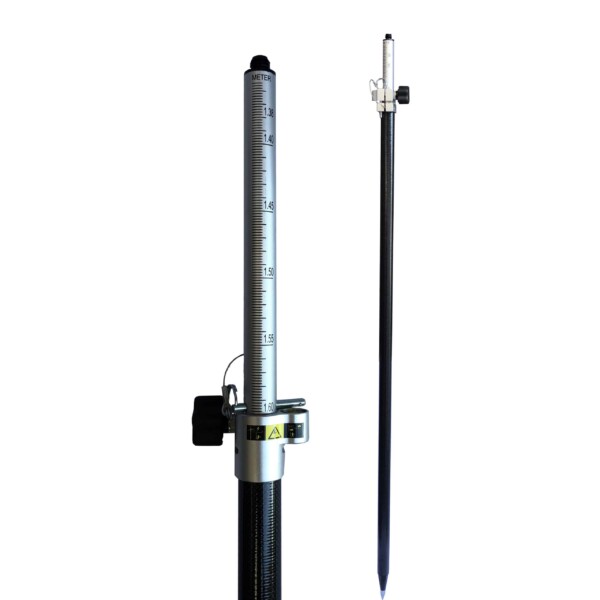
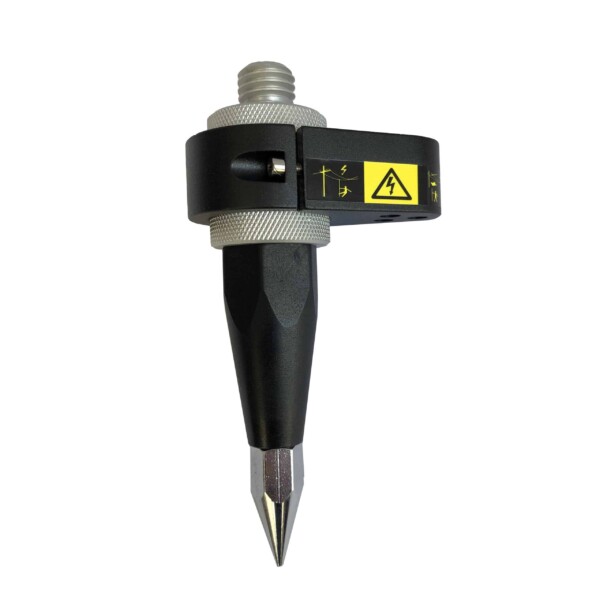
Our range includes adjustable carbon fibre rover poles, fixed-height RTK poles, prism poles, mini poles, tripod extension poles, and power poles designed for demanding field conditions. Lightweight materials, dependable locking systems, and stable construction help improve productivity while maintaining measurement precision throughout the workday.
Bench Mark supplies surveying poles designed for professional field crews who require durable equipment that performs reliably across construction, utility, and land surveying projects.
Showing all 6 results
Rover poles are commonly used with GNSS receivers for RTK positioning, while prism poles are designed for total station measurements using prisms or targets.
Carbon fibre poles are lightweight, rigid, and less affected by temperature changes, helping improve stability and long-term measurement consistency.
Fixed-height poles reduce setup errors because the height remains constant, making them popular for repeatable RTK workflows and control measurements.
Important factors include pole material, locking system reliability, weight, height markings, and compatibility with GNSS receivers or prism equipment.
The Base Power Pole isn’t for taking measurements, it’s built to mount and support a base station receiver at a stable, fixed location for the duration of a job. Unlike a rover or prism pole, which you move between points all day, this pole stays in one place, so stability and secure mounting matter more than portability.
Durable Field-Ready Construction
Surveying poles are regularly exposed to moisture, dust, transport vibration, and changing temperatures. Durable construction and dependable locking mechanisms help maintain stable positioning during repeated field setups.
Professionals working in construction, roadwork, utilities, and boundary surveying often rely on lightweight poles that balance portability with rigidity. Stable pole setups help improve GNSS positioning accuracy and reduce unnecessary rework in the field.
Our product selection supports a wide range of workflows, from RTK surveying and prism measurements to tripod extensions and elevation control applications.

6 Options, by Role in the Field
Not every pole here does the same job, rover, prism, mini, tripod extension, and base support poles each solve a different problem in the field. Each name links to the full product page.
Pole | Type | Best For |
Rover pole | GNSS/RTK work where you need to adjust height between points | |
Rover pole | Repeatable RTK and control work where a constant height reduces setup error | |
Prism pole | Total station measurements using prisms or targets | |
Mini pole | Tight spaces and short-range shots where a full-length pole won’t fit | |
Tripod extension | Raising a tripod-mounted instrument to working height | |
Base support pole | Mounting a base station receiver at a fixed, stable location |

Practical Solutions for Modern Workflows
Efficient surveying workflows depend on equipment that is easy to transport, quick to deploy, and built for consistent performance. Professional poles help crews move faster between setups while maintaining reliable positioning accuracy.
Bench Mark provides surveying accessories designed for professional applications, helping field crews improve efficiency across GNSS, total station, and construction layout operations.