


If your total station readings ever seem slightly inconsistent, the problem isn’t always calibration; it might be your prism pole setup. A prism pole plays a large role in the accuracy and reliability of your measurements.
Every distance or angle your total station records depends on a clean line of sight and a perfectly stable reflector position. That’s what the prism pole guarantees. It keeps your prism at a defined height, aligned, and steady, allowing the instrument to measure with confidence.
At Bench-Mark, we’ve supported surveyors across North America for over two decades and have seen how much precision comes down to setup. The right prism pole can mean the difference between a smooth survey and hours of rework.
How Prism Poles Work with Total Stations
Anatomy of a Reliable Prism Pole
Setting Up a Prism Pole for Accurate Readings
Types of Prism Poles and When They Work Best
Common Sources of Error and How to Prevent Them
What to Look for When Buying a Prism Pole
Why Prism Poles Improve Total Station Accuracy
Precision Starts with a Solid Basis
A total station measures distance by sending out a light or infrared signal toward a prism. The prism reflects that signal back, and the instrument calculates the distance based on the time it takes for the beam to return.
That’s why a small misalignment in prism height or pole tilt can throw off results. A centimeter of error at the pole translates to a centimeter of error in your final data, or more, depending on your slope distance.
A prism pole provides the framework for control. It makes the prism sit exactly above the survey point, at a known height, and faces the total station directly. When properly leveled and secured, it eliminates uncertainty in positioning and keeps your data tight and repeatable.
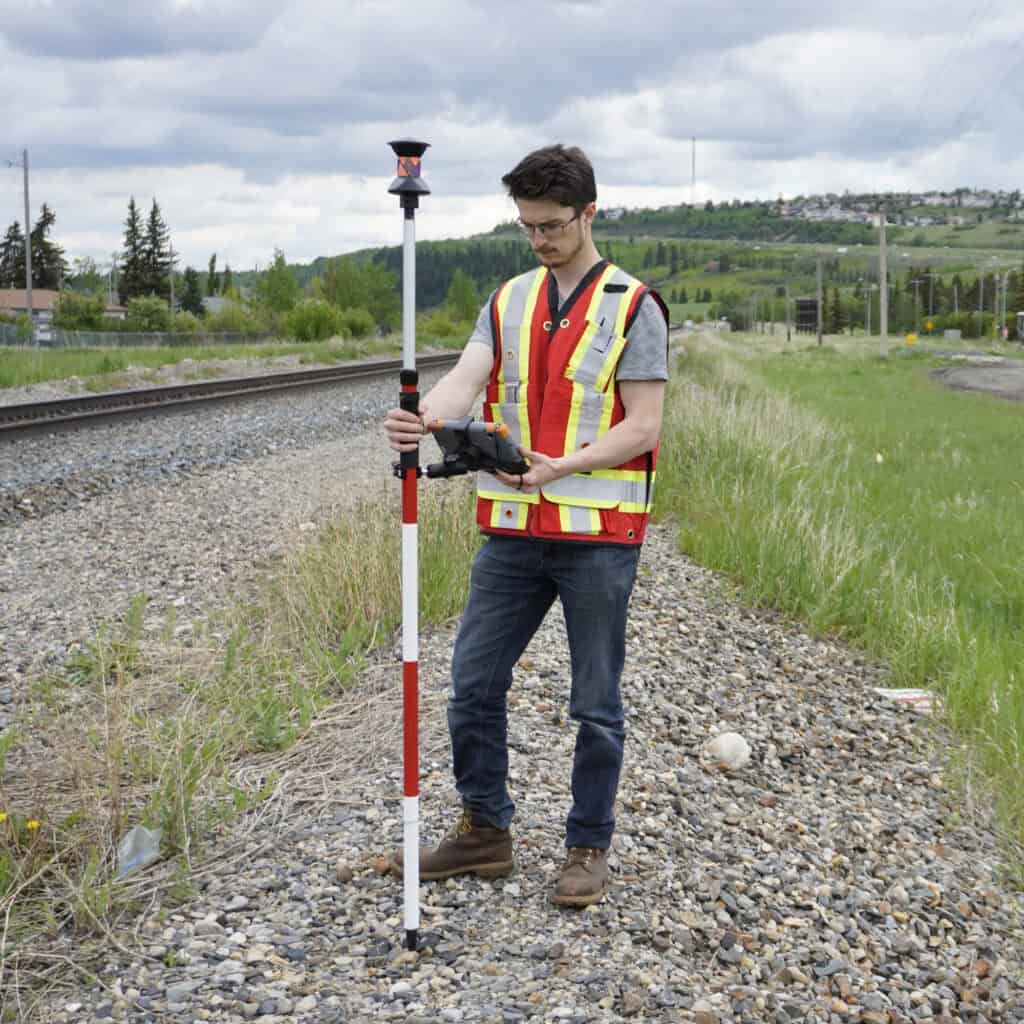
Modern prism poles are designed to balance lightness, stability, and precision. Aluminum poles are common in everyday fieldwork because they’re durable and easy to handle. Fiberglass options provide more rigidity and electrical insulation. Carbon fiber are lightweight, corrosion-resistant, and tough enough to handle years of field use without warping. A high-quality pole typically includes:
The details like stable locks, straight alignment, and a tight mount may seem small, but they are the foundation of accurate total station work.
Precision begins before the first shot. When you set up your prism pole, start on firm, stable ground so the tip doesn’t shift under pressure. Extend the pole to the required height, then lock it securely. The pole’s locking mechanism should feel firm. If it slips even slightly, it can compromise your entire setup.
Attach the prism snugly to the top mount and double-check that it faces the instrument. Before each shot, pause to check the bubble level; it should be perfectly centered. Here’s a quick checklist for a reliable setup:
If you’re working in windy or uneven terrain, brace the pole lightly rather than leaning on it. Excess pressure or movement disturbs alignment and changes your vertical angle.
Fixed-height poles are simple and consistent, which is perfect for control points and monitoring stations where geometry never changes. Telescopic poles are the best for everyday fieldwork, extending for varied terrain or compacting for transport. Mini poles excel in tight urban sites or building interiors where space is limited.
For most survey and construction jobs, a telescopic aluminum or carbon fiber pole offers the best balance of durability and ease of use. It’s light enough to carry all day yet rigid enough to keep your line stable.
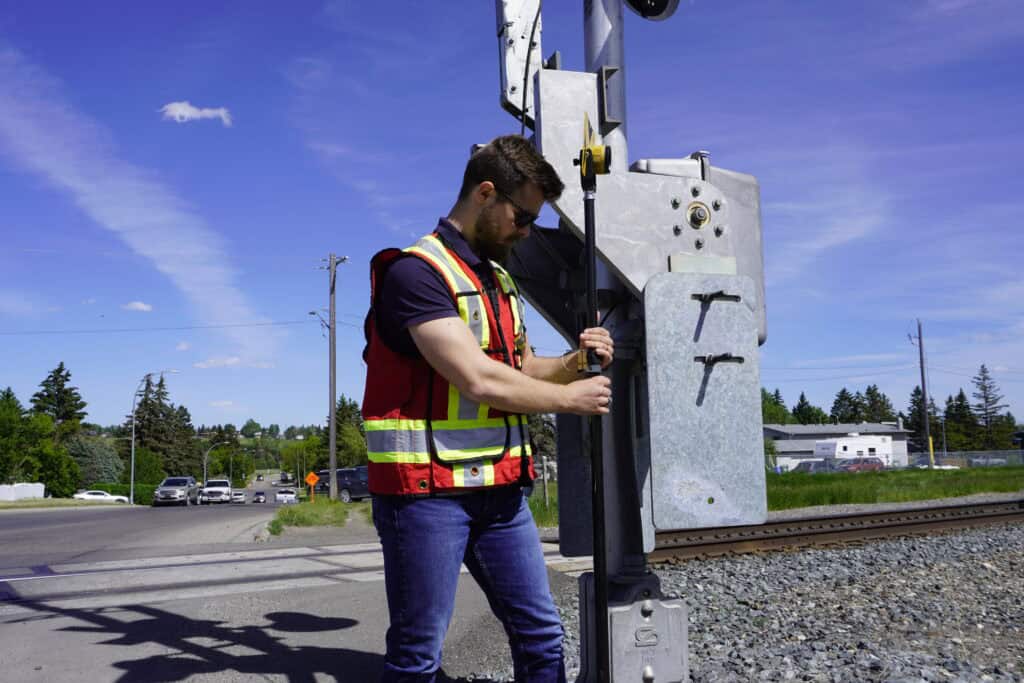
Many measurement errors come from setup, not from the total station itself. Forgetting to level the pole, entering the wrong prism height in your total station, or leaving a lock partially open can all distort your results. To avoid these issues:
Regular inspection matters. Over time, the bottom tip can wear down or bend, the locks can loosen, and even small dents can affect how vertically the pole stands. Taking a few minutes to check gear before each survey keeps your results within tolerance.
Choosing the right prism pole depends on how and where you work. Surveyors who spend long days in the field often prefer carbon fiber for comfort and reduced fatigue, while construction teams rely on fiberglass for ruggedness and electrical safety. Whatever your preference, accuracy depends on a clear height scale, stable locks, and a precise bubble level.
Bench-Mark offers both GeoMeasure and GeoMax prism poles, carefully selected for long-term performance and compatibility with leading total stations and GNSS setups. Every pole we supply is field-tested for durability and calibrated to deliver consistent alignment under real-world conditions.
If you frequently pair your total station with a Hemisphere S631 or Zoom95, we can recommend the poles that best match your workflow and height configurations — ensuring smooth integration and precise data from the start.
The geometry of total station measurement depends entirely on the reflector’s position. When a prism sits directly above a survey point, at a stable, known height, the instrument can calculate coordinates with millimeter precision. A slight lean, a wobble, or a misread height introduces measurable error.
A properly leveled prism pole removes those variables. It allows the total station to measure distances and angles exactly as designed, without guesswork. Over large projects or repeated measurements, that reliability translates to fewer adjustments, faster setups, and consistently accurate survey results.
In surveying, precision starts with the basics. A sturdy, properly leveled prism pole is the foundation of accurate total station work. It’s the one piece of equipment that silently ensures every distance and angle reflects reality. At Bench-Mark, we’ve refined field setups for years. Our prism poles are field-tested in real survey conditions to ensure that every shot you take is as precise as the one before.
