

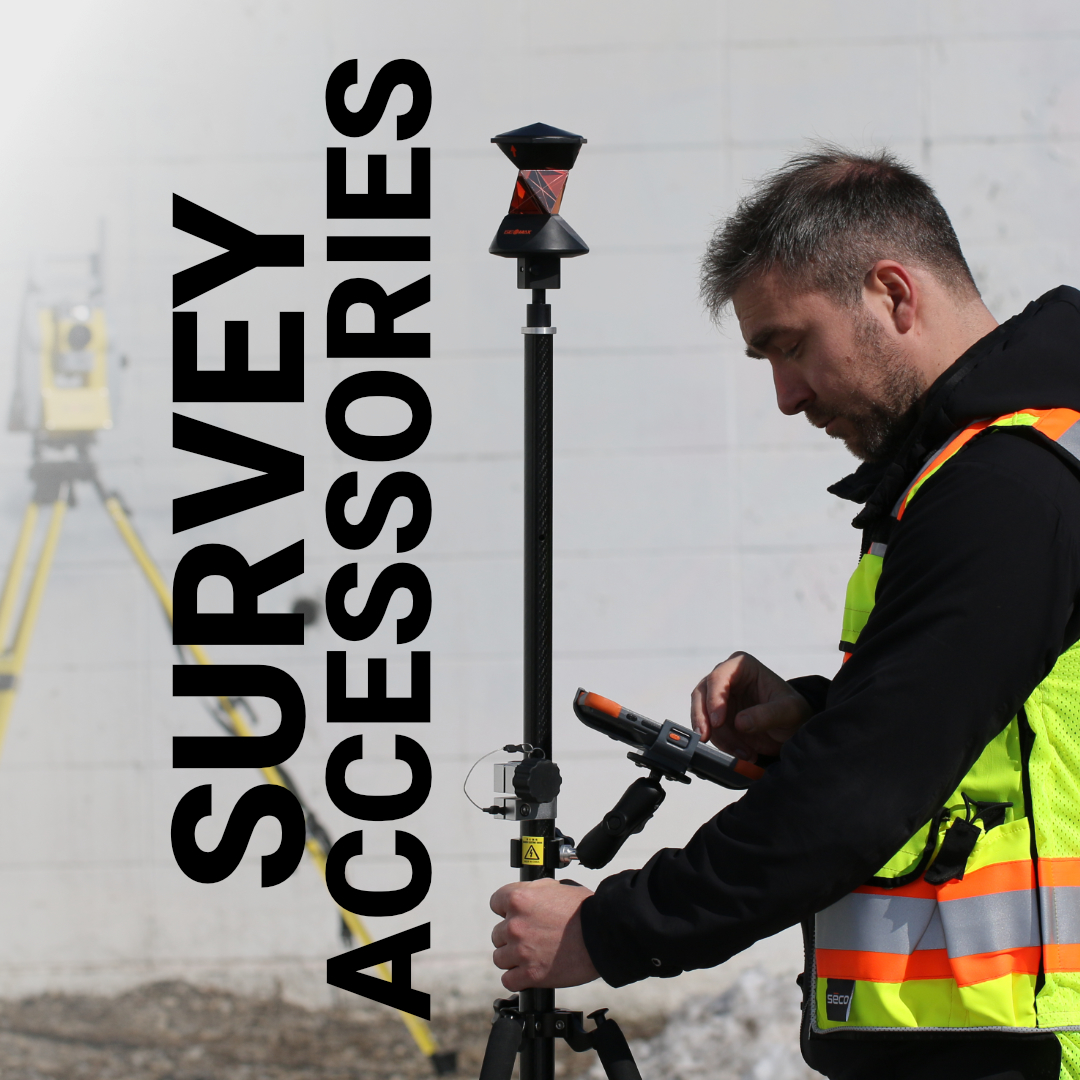
A GNSS receiver sitting on a tripod looks simple enough. Point it at the sky, wait for a fix, collect your data. But the difference between a surveyor who consistently hits centimeter accuracy in difficult conditions and one who’s constantly fighting dropouts, reinitialization, and wasted field hours almost never comes down to the receiver itself. It comes down to everything around it. The pole, the tripod, the radio link, the data collector, the software, every piece of the system either reinforces your accuracy or undermines it. Choosing your GNSS GPS accessories with the same care you give your receiver is what makes the whole investment actually perform.
The Receiver Is Only the Start
The Data Collector: Your Field Interface
Tripods for Base Station Setup
Communication: Radios and Network Modems
Batteries and Power Management
Software: The Piece That Ties Everything Together
The Right Kit Makes the Difference in the Field
Your RTK receiver is the core of the system. It’s what tracks the satellites, resolves the carrier phase ambiguity, and outputs a position. But it can only do that job well when the rest of your kit is properly matched to it.
Think of it this way: a high-performance receiver connected to a cheap pole with a worn bubble, running on a data collector with incompatible software, feeding corrections through a marginal radio link, is not a high-performance system. It’s an expensive receiver being held back by everything around it. Every GNSS accessory either supports your fix quality or chips away at it.
The data collector is how you talk to your receiver. It’s where you configure your base, manage your rover, collect your points, and run your stakeout. For most professional survey setups in the US, this is either a dedicated survey controller or a rugged tablet running field software.
What matters most in a data collector for RTK surveying:
For most of our setups, data collectors run FieldGenius. That combination matters because FieldGenius is purpose-built for professional survey workflows, not a mapping app bolted onto a consumer tablet. The software should match the hardware you’re running. A capable receiver running mismatched or underpowered software will still produce poor results.
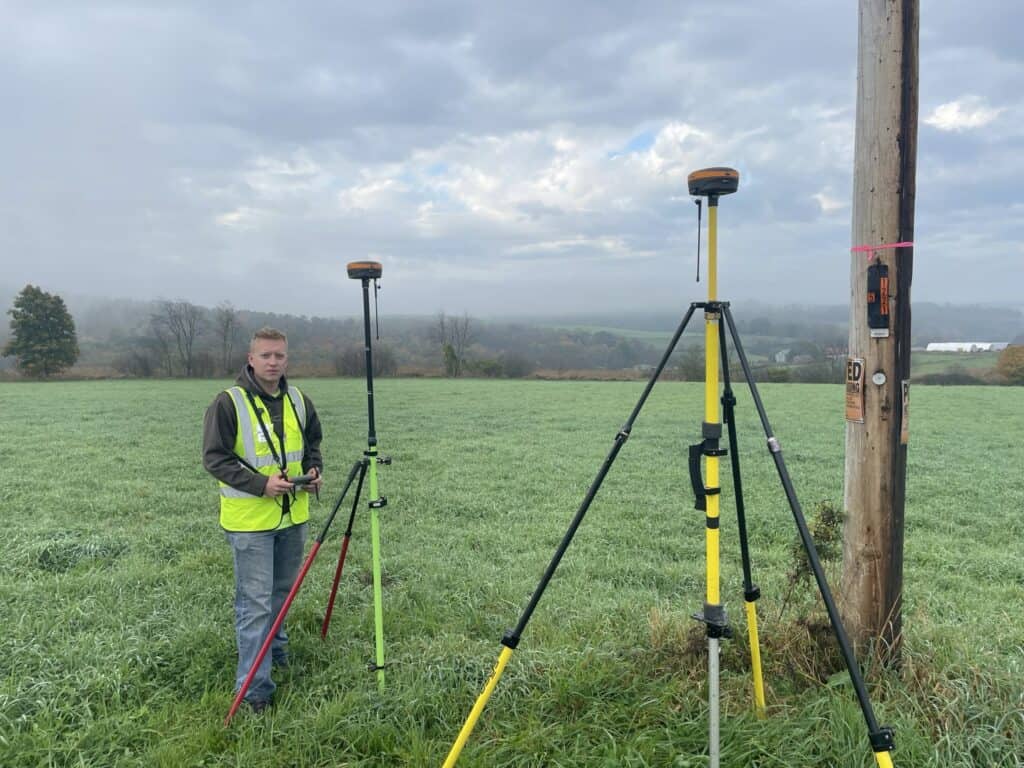
The pole is where physics gets simple and where surveyors often cut corners. Your receiver sits on top of it. Every bit of wobble, tilt, or instability in the pole translates directly into positional error at the tip. For a system delivering 8mm horizontal accuracy, a carelessly held pole introduces far more error than the receiver ever would.
A quality survey pole needs to be rigid, carbon fiber or reinforced aluminum, with a reliable bubble level and clearly marked height increments. If your receiver doesn’t have IMU tilt compensation, that bubble is the only thing keeping your measurements honest. Even with tilt compensation enabled, a well-leveled pole produces more consistent results and faster initialization.
Bipods are an accessory that experienced crews often overlook until they’ve spent one too many hours holding a pole steady over a control point. For static occupation, a bipod takes the operator out of the equation entirely and lets the receiver do its job without introducing motion noise.
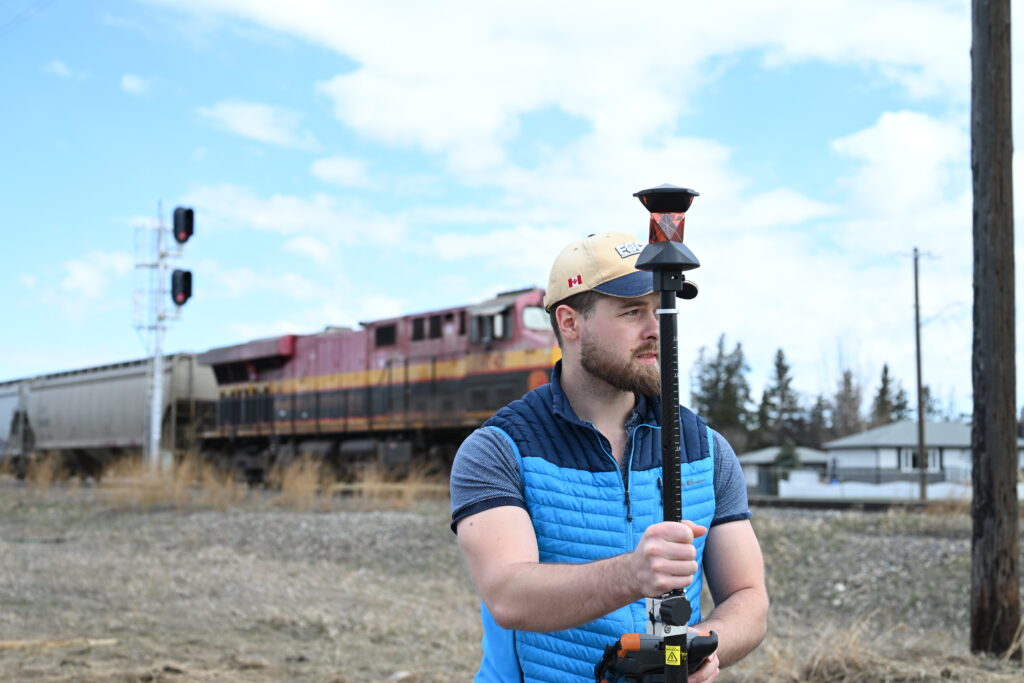
When you’re running a base and rover setup, your base station doesn’t move, and it shouldn’t. A quality tripod is what makes that possible. For any setup where you’re occupying a known point or establishing your own local reference, the tripod’s stability directly affects the quality of every correction your base transmits.
Look for tripods that are adjustable across a practical height range, use a reliable quick-release head, and are built from materials that don’t flex under load, aluminum and fiberglass are both solid choices. Quick setup matters in the field, but not at the cost of stability once you’re set.
A tribrach is equally important and often treated as an afterthought. For any setup that requires precise centering over a monument or control point, a quality optical plumb tribrach is not optional. The tribrach is what keeps your antenna phase center directly above your survey mark, which is the whole point.
For RTK to work, your rover needs to receive real-time corrections from a base, either your own or a CORS network. That communication link is as critical as any other piece of the system, and it’s where setups fail in ways that are genuinely difficult to diagnose in the field.
Most professional RTK receivers have an integrated UHF radio and a cellular modem. The radio gives you a self-contained correction link that doesn’t depend on cell coverage, essential for remote sites, mining operations, or any environment where network connectivity is unreliable. Cellular modems give you access to CORS networks like the US National Geodetic Survey’s CORS system, state DOT networks, and commercial correction networks, which eliminate the need to set up your own base at all.
Where issues arise: radio range is highly dependent on terrain, antenna placement, and transmit power. In open country, a good UHF radio link from a base mounted high on a tripod can reach several kilometers without issue. In urban environments or broken terrain, that range drops significantly. Knowing your communication options before you get to site, and having a fallback, is part of planning a professional RTK operation.

This one is straightforward and consistently underestimated. A receiver that dies at hour six of an eight-hour field day doesn’t just stop collecting, it loses your work context, requires reinitialization, and costs you time that can’t be recovered on a fixed-schedule project.
Most professional RTK receivers run on internal lithium-ion packs rated for a full work day under typical conditions. “Typical conditions” rarely match a cold Minnesota February or a long summer day in Texas heat. Carry a spare battery. Know your receiver’s actual runtime under your conditions, not the spec sheet maximum. For base stations left running all day, an external power source, a sealed lead-acid battery or a small LiPo pack with a solar trickle charge, is often the right call on longer projects.
Hardware accessories extend your receiver’s physical capability. Software extends what you can do with the data it produces. For a professional survey workflow, your field software and office processing software need to work together cleanly.
FieldGenius, which powers the systems we sell, handles the full RTK field workflow: base setup, rover configuration, point collection, stakeout, and data export. It’s built to work with the hardware in our packages, which means the receiver, the data collector, and the software are tested together rather than configured independently and hoped to interoperate. That matters more than most buyers realize until they’ve spent an afternoon troubleshooting a communication issue that wouldn’t exist in a properly matched system.
The best RTK receiver on the market won’t save a project that’s being held back by a worn pole bubble, a failing radio link, or a data collector running software that doesn’t communicate cleanly with the receiver. GNSS GPS accessories are the support structure that allows a precision instrument to actually deliver precision.
At Bench-Mark, we configure complete systems. When you buy from us, we’re not dropping a receiver in a box and sending you a link to figure out the rest. Our team helps you build a kit that’s matched, receiver to data collector, software to workflow, accessories to the specific environments and job types you’re working in. If you want to talk through what your setup should actually look like, reach out. We’ll help you build it right the first time.
