


If you ask a new surveyor what piece of gear they rely on most, they’ll probably say their GNSS receiver, total station, or tripod. But ask anyone with years in the field, and the answer often shifts: it’s the tribrach. This small, unassuming connector between your tripod and instrument is one of the most underrated tools in your surveying setup. A quality survey tribrach can be the difference between a clean dataset and a day full of misaligned measurements.
A loose or worn tribrach can throw off even the most advanced equipment. That’s why understanding, maintaining, and using a reliable tribrach is essential for accurate, stable survey data.
What Exactly Is a Survey Tribrach?
Why Tribrach Quality Matters
Optical vs. Laser Plummet
Common Tribrach Mistakes
Integrating Tribrachs With Your Survey Workflow
Maintenance and Calibration
The Bottom Line
FAQs
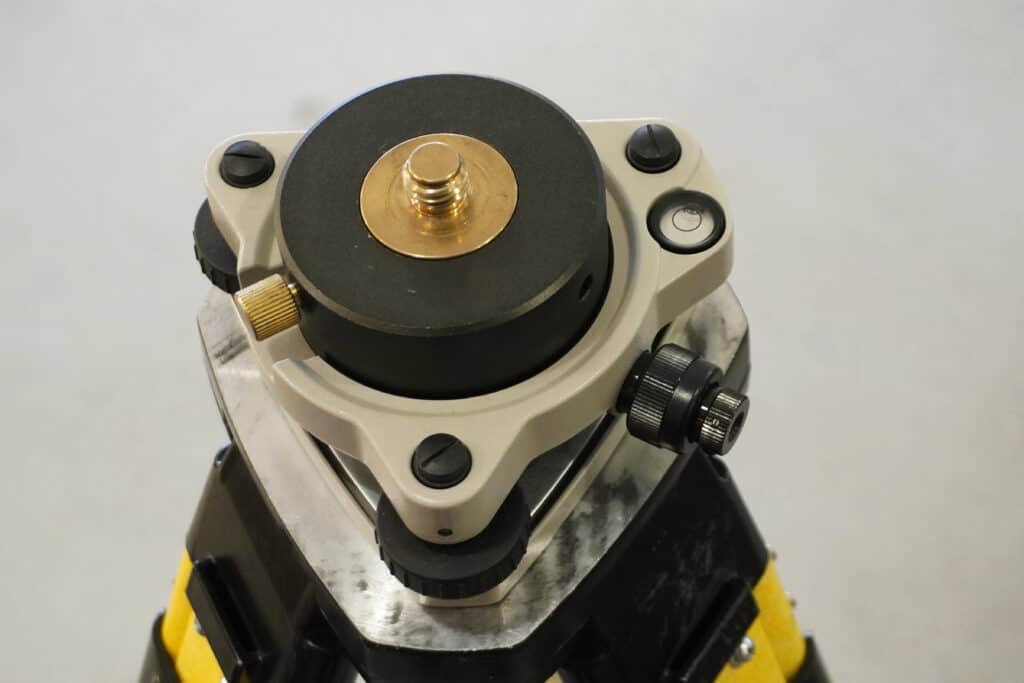
A surveying tribrach is a three-armed base plate designed to secure your instrument to a tripod. It allows you to finely adjust and level your equipment, keeping it perfectly plumb over a control point. Think of it as the precision joint that locks your entire survey setup together. Without it, maintaining horizontal stability and vertical alignment is nearly impossible.
Tribrachs consist of a base plate that threads to your tripod, leveling screws for micro-adjustments, a bubble vial for leveling, and an optical or laser plummet for precise centering. Older models required plumb lines and took longer to set up, but modern tribrachs with built-in plummets save time and improve field accuracy. Even small misalignments in any of these components can compromise your survey.
You can compare a tribrach to the suspension system in a vehicle: unseen but crucial. Stability, repeatable accuracy, and reliable centering all begin with a solid tribrach. Poor-quality or worn tribrachs introduce tiny shifts that compound across a survey, creating significant errors in your final dataset. High-quality tribrachs ensure the following benefits:
For surveyors using RTK GNSS systems or total stations powered, a precise tribrach ensures that all measurements rely on a consistent reference point. Without it, a small wobble in your base can introduce cumulative errors across your survey.
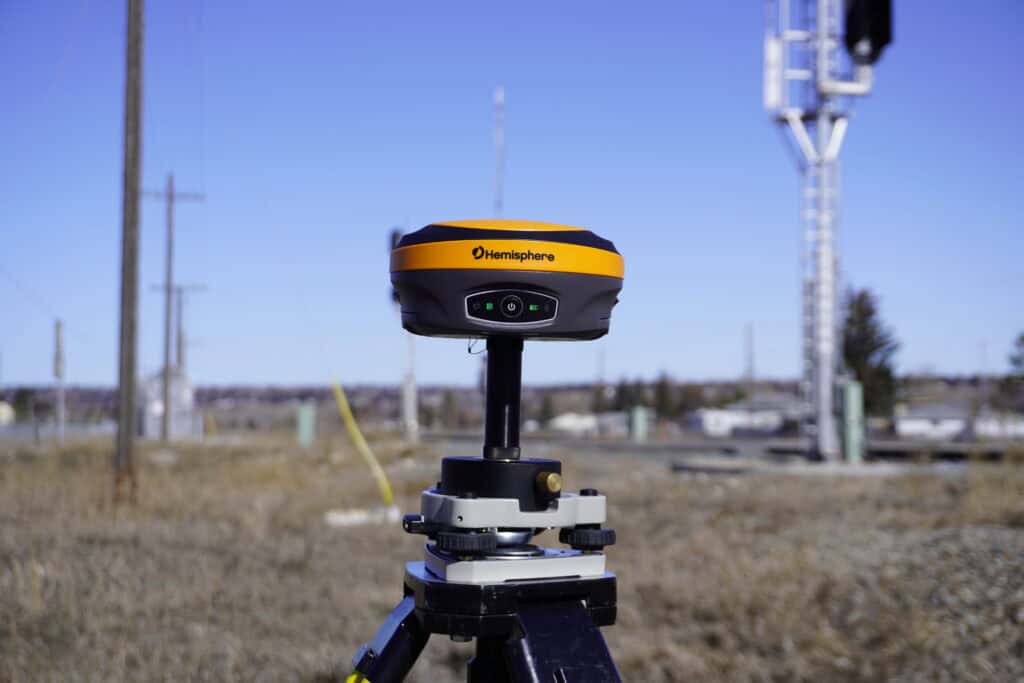
Tribrachs typically include either an optical plummet or a laser plummet. Both allow precise centering, but the choice depends on field conditions. Optical plummets are preferred for close-range, high-precision setups and offer durability in rugged conditions. Laser plummets provide faster setup for large sites or low-light scenarios but require battery power. Most surveyors using RTK GNSS or total stations rely on optical plummets for speed, durability, and accuracy.
Even experienced crews sometimes make simple but costly mistakes with tribrachs. Using the same tribrach for all instruments, ignoring wear from field conditions, over-tightening locking screws, or skipping re-leveling after swapping instruments can all introduce measurement errors. To avoid these issues, it helps to follow a short maintenance checklist:
A tribrach is like a workflow accelerator. When paired with a tripod and rover setup, it allows surveyors to reposition, save, and reuse base positions across multiple days. This is especially important for large-scale civil engineering or land development projects where survey data must be consistent over time.
For RTK GNSS surveys using instruments, the tribrach ensures that the base’s coordinates are precisely aligned with the local grid or known geodetic points. Without a stable tribrach, rover measurements can drift, requiring additional post-processing or rework.
Proper use also reduces setup time. With a high-quality tribrach, surveyors can quickly attach, level, and plumb their instruments, even in difficult terrain.
Maintaining a tribrach is straightforward but critical. Regular calibration ensures your optical or laser plummet remains true, and consistent leveling checks prevent drift over time. Whenever setting up on a new or known point, verify your instrument’s plumb and bubble vial, especially after moving or adjusting the setup. Save calibration and setup records for each project to maintain consistent accuracy across survey days.
High-quality tribrachs paired with proper care can last 5-10 years in the field. Neglecting maintenance, however, can result in costly errors, wasted time, and compromised data quality. Key maintenance practices include:
Precision in surveying starts at the ground with a reliable tribrach. A quality survey tribrach ensures your equipment performs as intended. Small adjustments, regular checks, and proper handling prevent measurement errors, saving time and maintaining confidence in your results.
Before troubleshooting complex GNSS issues, always inspect your tribrach. A tiny misalignment here can create major headaches in your data. Bench-Mark is proud to provide high-quality tribrachs, online sales, and support across the U.S. and Canada to help surveyors consistently achieve accuracy. Remember that it starts from the bottom up, and a solid tribrach is the foundation of every precise survey.
It secures and levels survey instruments on a tripod, providing stability and precise centering over survey markers.
At least annually, or whenever you notice drift in the plummet or leveling.
Yes, as long as the adapter and locking mechanism fit each instrument type and maintain repeatability.
Optical provides higher precision and durability; laser is faster for large or low-light sites. Many surveyors maintain both for different conditions.
