

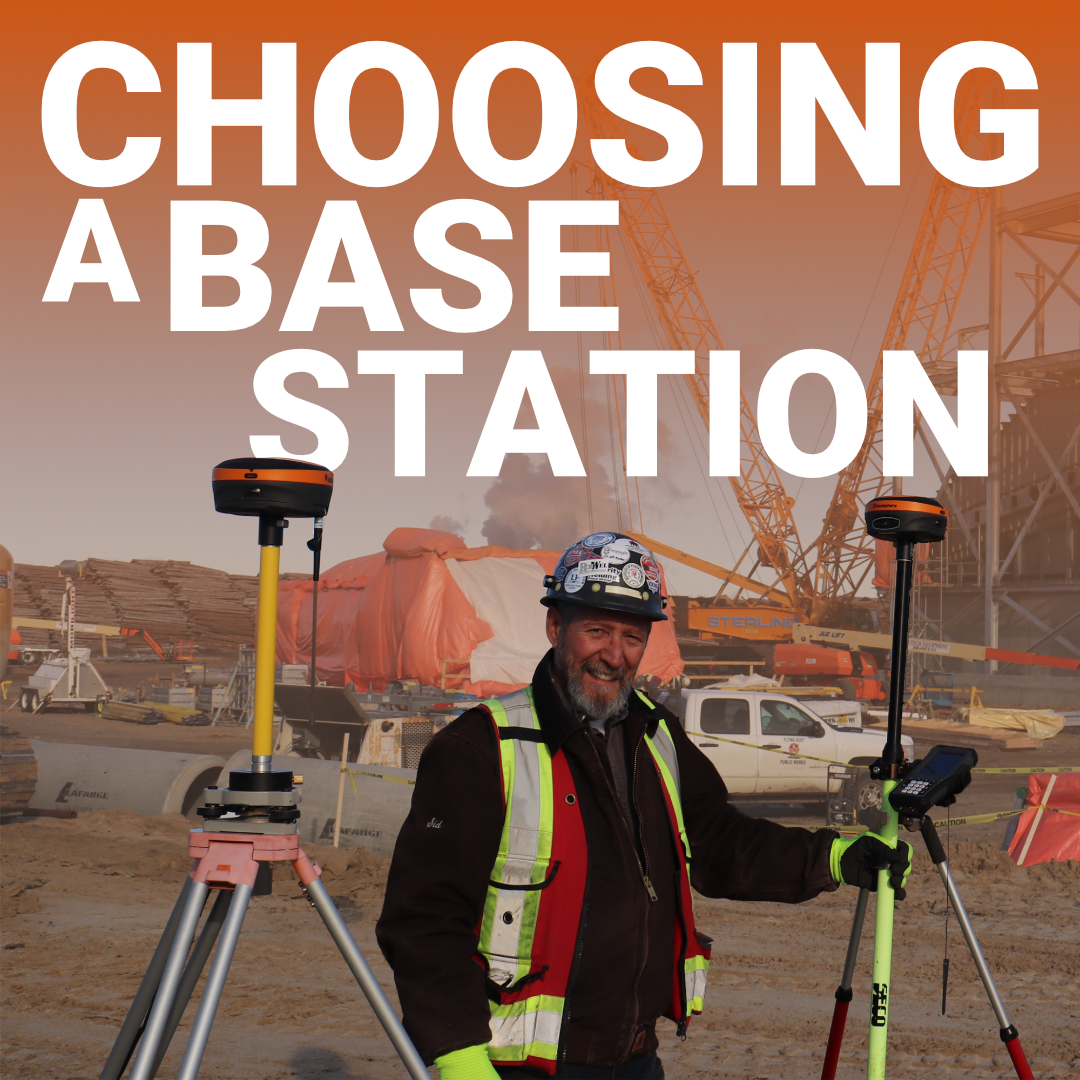
Most surveyors and contractors assume RTK base stations are heavy, expensive boxes that need truck beds and permanent mounts. That assumption costs time and limits where you can work. Small GNSS base stations have changed the game, compact receivers that fit in a backpack, set up in minutes, and deliver the same centimeter-level corrections as traditional bases.
Why Small Base Stations Matter for RTK Work
When Running Your Own Base Makes More Sense Than NTRIP
Real-World Applications Where Small Bases Shine
Choosing the Right Small Base Station
Setting Up a Small Base Station Correctly
Maintenance and Field Care
Accuracy You Can Actually Depend On
Traditional RTK base stations were built for permanent installations, survey monuments, control networks, and long-term monitoring sites. They’re accurate, but they’re also heavy, power-hungry, and designed to stay in one place.
Small GNSS base stations flip that model. They’re built for mobility: lightweight receivers, integrated batteries, and antennas compact enough to mount on a range pole or small tripod. You can carry a complete base setup in one hand and be transmitting corrections in under five minutes.
The practical advantage shows up on multi-day projects where you move sites daily, in remote areas where NTRIP networks don’t reach, or when you need backup corrections independent of cellular service. Small bases give you the flexibility to work anywhere without sacrificing the precision RTK demands.
NTRIP correction services are convenient when they work, connect your rover to a nearby mountpoint via cellular, and you’re getting RTK corrections without hauling extra gear. But NTRIP isn’t always the answer. You should consider running your own base station when:
Small base stations also make sense when you need guaranteed uptime. Community-based NTRIP services can go offline without warning. Paid services aren’t immune to outages either. Your own base eliminates dependency on third-party infrastructure.

Small GNSS base stations fit workflows where mobility and independence matter more than permanent infrastructure.
Moving between multiple job sites each week means hauling equipment anyway. A small base travels with your rovers and sets up wherever you need it. No waiting for NTRIP service to activate in new areas or dealing with coverage gaps at the edges of the development.
Environmental surveys, pipeline corridors, utility right-of-way, these projects take you far from urban NTRIP networks. A small base station gives you RTK corrections in the backcountry where cellular service is nonexistent and the nearest permanent base is hours away.
Large grading projects often run multiple rovers and machine control systems simultaneously. One base station positioned centrally on-site provides corrections for every unit. You’re not managing separate NTRIP connections or troubleshooting why three rovers are pulling corrections but the fourth isn’t.
Farmers running controlled traffic systems or variable rate applications across large acreage benefit from a fixed base on their property. Set it once at the start of the season, and it serves tractors, sprayers, and planters without monthly fees or reliance on regional networks.
Not every compact GNSS receiver works well as a base station. The specs that matter for RTK rovers, fast initialization, good multipath rejection, matter differently for bases.

Base station accuracy determines rover accuracy. A poorly positioned or improperly configured base propagates errors to every point your rovers collect.
Choose a location with a clear sky view in all directions. Obstructions, trees, buildings, hills, introduce multipath and block satellites, degrading the corrections you’re broadcasting. Elevated spots often work better than low ground, but avoid placing the base where it’s exposed to heavy equipment traffic or theft.
The base must stay motionless during operation. Even small movements introduce errors. Use a fixed-height tripod with a leveling head or a survey monument if available. Range poles work in a pinch but stake them securely, wind shifts on a 2-meter pole add up over an 8-hour day.
If you’re collecting data that needs to tie to control, occupy a known point and enter coordinates manually. If you’re running a local site calibration, let the base average its position for 15-30 minutes before starting corrections. The longer the averaging period, the better the base position.
For radio transmission, configure your base to output RTCM messages at 1 Hz (once per second). Higher rates like 5 Hz or 10 Hz increase radio bandwidth and don’t improve accuracy for most survey work. Set the radio channel to avoid interference from other users in the area.
For NTRIP broadcasting, configure your base to connect to an NTRIP caster like RTK2go (free community service) or a commercial caster. You’ll need cellular or internet connectivity at the base location. Enter the caster address, mountpoint name, and any required password. Rovers connect to the same mountpoint to pull corrections.
Small base stations take abuse but aren’t indestructible. After each use, inspect connectors for dirt, moisture, or corrosion. TNC and SMA connectors accumulate grit in dusty environments, and poor connections degrade signal quality.
Store batteries partially charged (40-60%) if the base won’t be used for weeks. Lithium batteries degrade faster when stored fully charged or fully drained. Check firmware updates periodically, manufacturers release corrections for satellite tracking improvements and bug fixes that affect base performance.
If you’re running the base in extreme temperatures (below -10 °C or above 40 °C), expect shorter battery life and longer initialization times. Cold slows battery chemistry; heat increases receiver power draw. Plan accordingly.
Small GNSS base stations aren’t a compromise, they deliver the same centimeter-level corrections as full-size bases when set up properly. The difference is portability, not performance. Whether you’re running a single-rover survey crew or managing a fleet on large construction sites, a small base gives you independence from NTRIP networks, control over correction quality, and the flexibility to work anywhere satellites are visible.At Bench-Mark, we’ve helped surveyors and contractors across North America configure base-rover systems for everything from boundary surveys to highway grading. Whether you’re setting up your first base station or upgrading from older equipment, we can walk you through receiver selection, correction setup, and the integration that fits your workflow. Because RTK accuracy starts with a solid base, and now that base fits in your truck without taking over the bed.
